I've gotten into a comfortable routine when it comes to painting oil portraits: set up my mini art studio, pull up my reference photo, sketch out the proportions. Then I mix up a general shadow color and a highlight color, and block them in. I make sure to get the darkest values in quickly and then add some halftones to soften the edges.
This neat little routine was shaken up this semester: I not only switched back to dry media (charcoal), but I'm now working from live models in a classroom setting. I did not anticipate this being such a different experience.
First off, I had not worked with charcoal for a while. With charcoal, I typically build things up very slowly and in a controlled manner. A full charcoal portrait can take me around 8 hours. I am learning that I cling to control and planning in my artistic process.
Steven Sondheim famously said, “Art, in itself, is an attempt to bring order out of chaos.” I control all the different variables when sitting down to create, bringing a sense of order and calmness to the process. This typical methodical process is not necessarily possible when you have such a limited amount of time to draw. You need to move the charcoal quickly and confidently, without getting hung up on the small amounts of patchiness and unintentional texture.
Secondly, working from a live model felt very different than working from a photograph. Working from a picture already eliminates the need to translate the three-dimensional world onto the two-dimensional paper. The camera already takes care of this. Working with a model forces you to work quickly, because they might move slightly. There is no zooming in to look at all the many details that were never really necessary anyway.
Working from life also made me notice the details that cameras typically over-sharpen or darken. There is a certain softness to the eyes and lips that is caused by movement. The edges on the nose, in contrast, are harder due to a lack of movement.
Despite this starting as an uncomfortable experience during the first session, there is a certain rush to working from a live model surrounded by your peers. Feeling that everyone around you is also singularly focused on capturing the likeness of the model. Knowing that the clock is ticking, and you have only so much time to make a simple statement with your drawing. I walked out of our first drawing session feeling absolutely exhausted and not satisfied with my first drawing, yet I was ready and excited to continue practicing. I knew the deficiencies I saw in my first attempt could be fixed over time with focused practice.
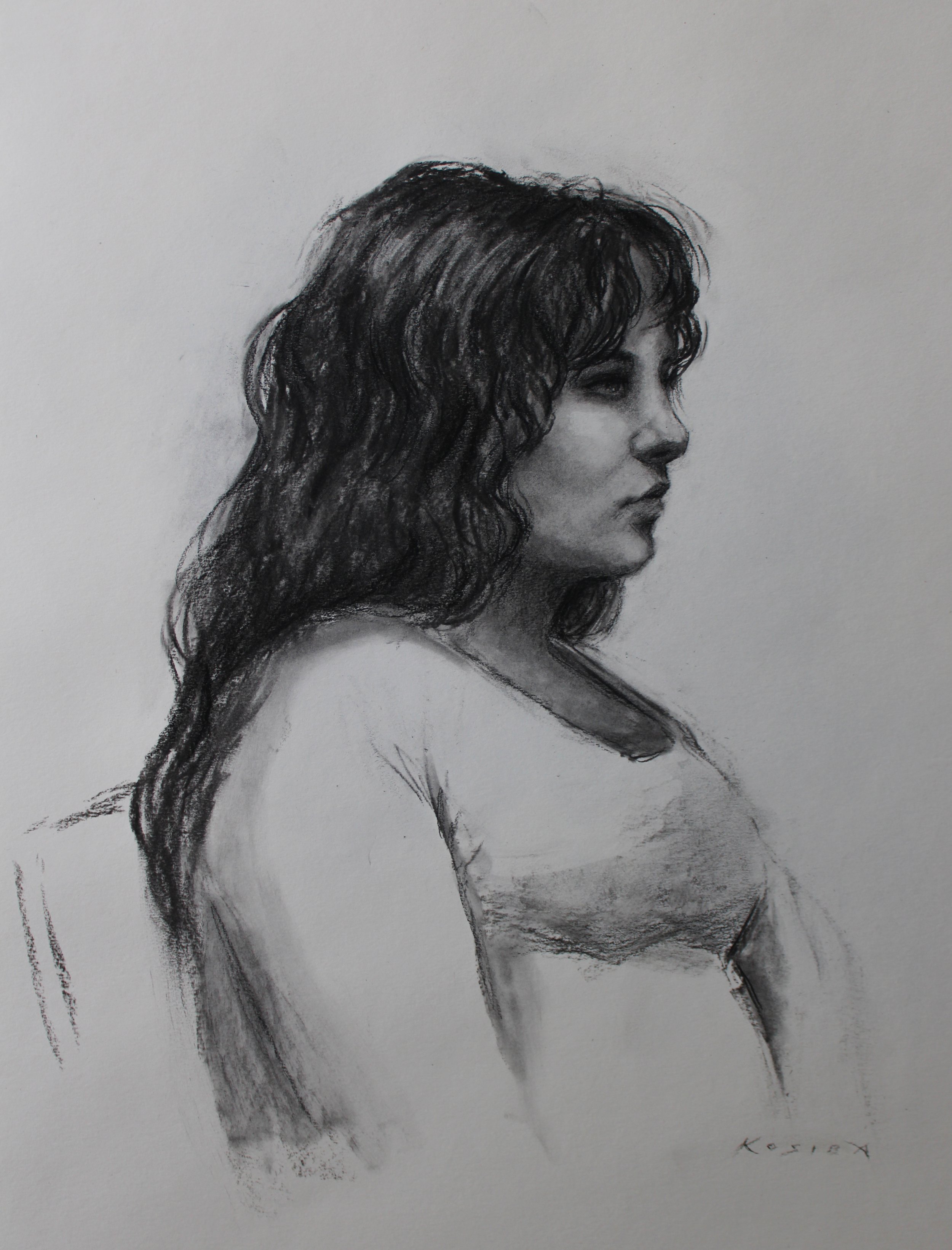
First Drawing from Live Model - 1.5 hours
By the time I started my second live session, I felt ready to tackle this challenge again. I knew I had to start viewing this process the same way I view painting. I should be viewing this as a whole composition, with opportunities for playful edges that emphasize the focal point. This process should not be new or foreign to me. There are some new variables, but rendering form should feel the same – I’ve done this plenty of times before.
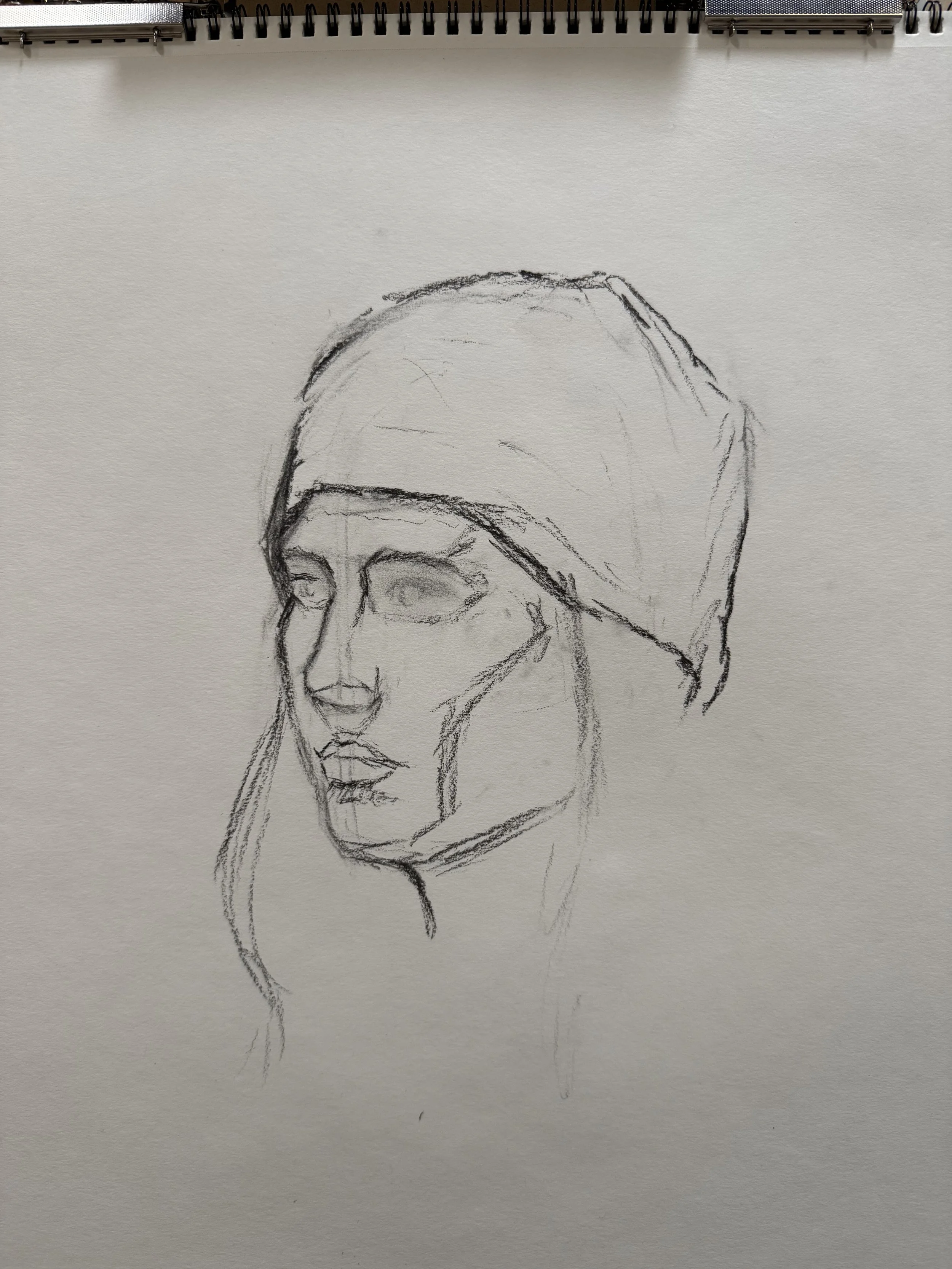
Initial sketch after 20 minutes
I started with a simple proportional block-in using vine charcoal. I tried to construct the head with mostly straight lines and angles. Then, turning a broken piece of vine charcoal on its side, I blocked in the major shadow shapes. One benefit of working from life is that it's hard to get lost in the details since you have to sit further away from the subject.
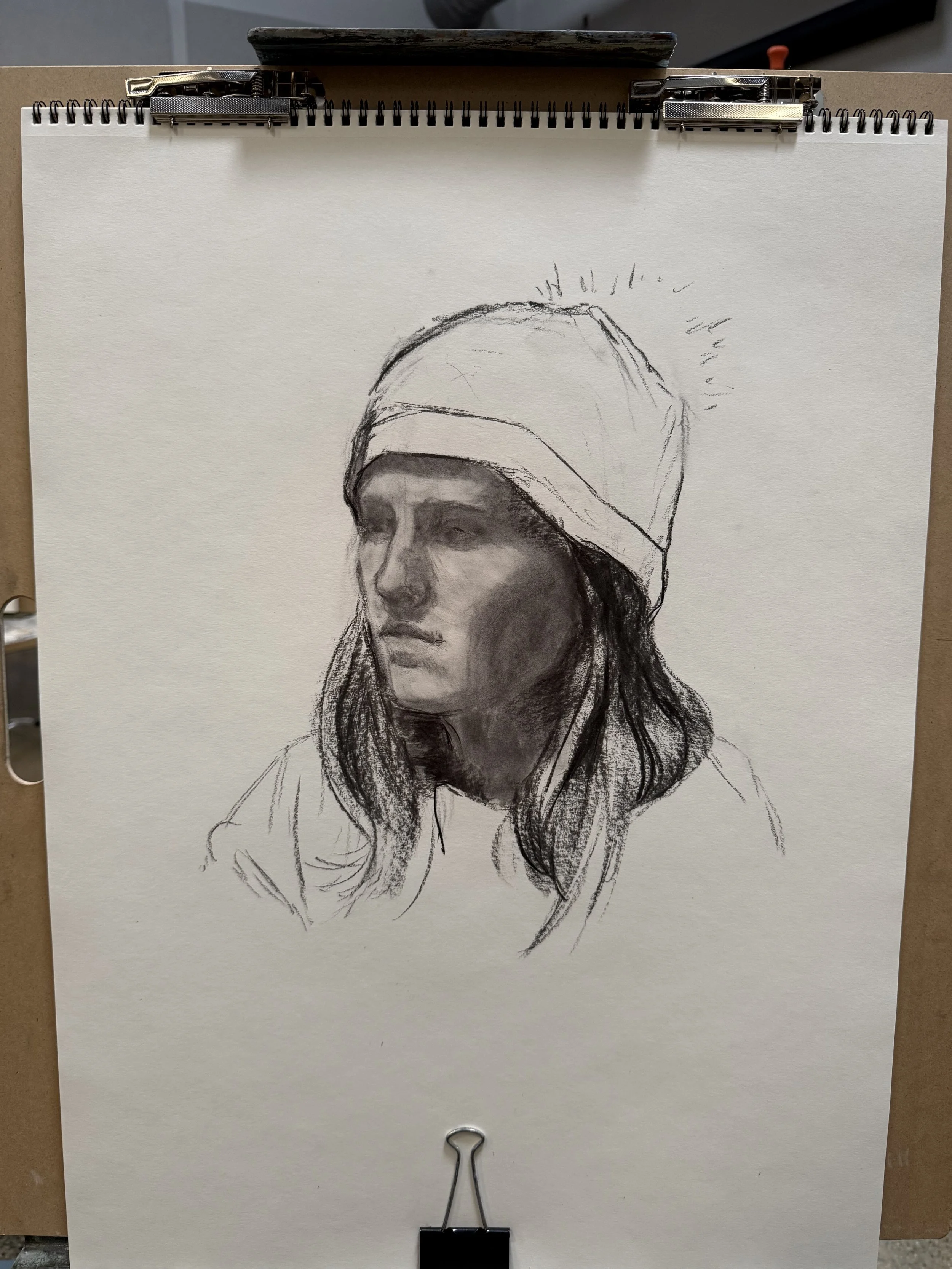
Value block-in.
Once I blocked in the shadows, I used a smudging tool to move some of the charcoal from the values into the midtones and highlights. This gave the skin a good local value. I would go in later and reestablish any bright highlights with my kneaded eraser. Once I was satisfied with the value structure, I switched to my charcoal pencil to continue rendering the darkest details I knew were correctly placed.
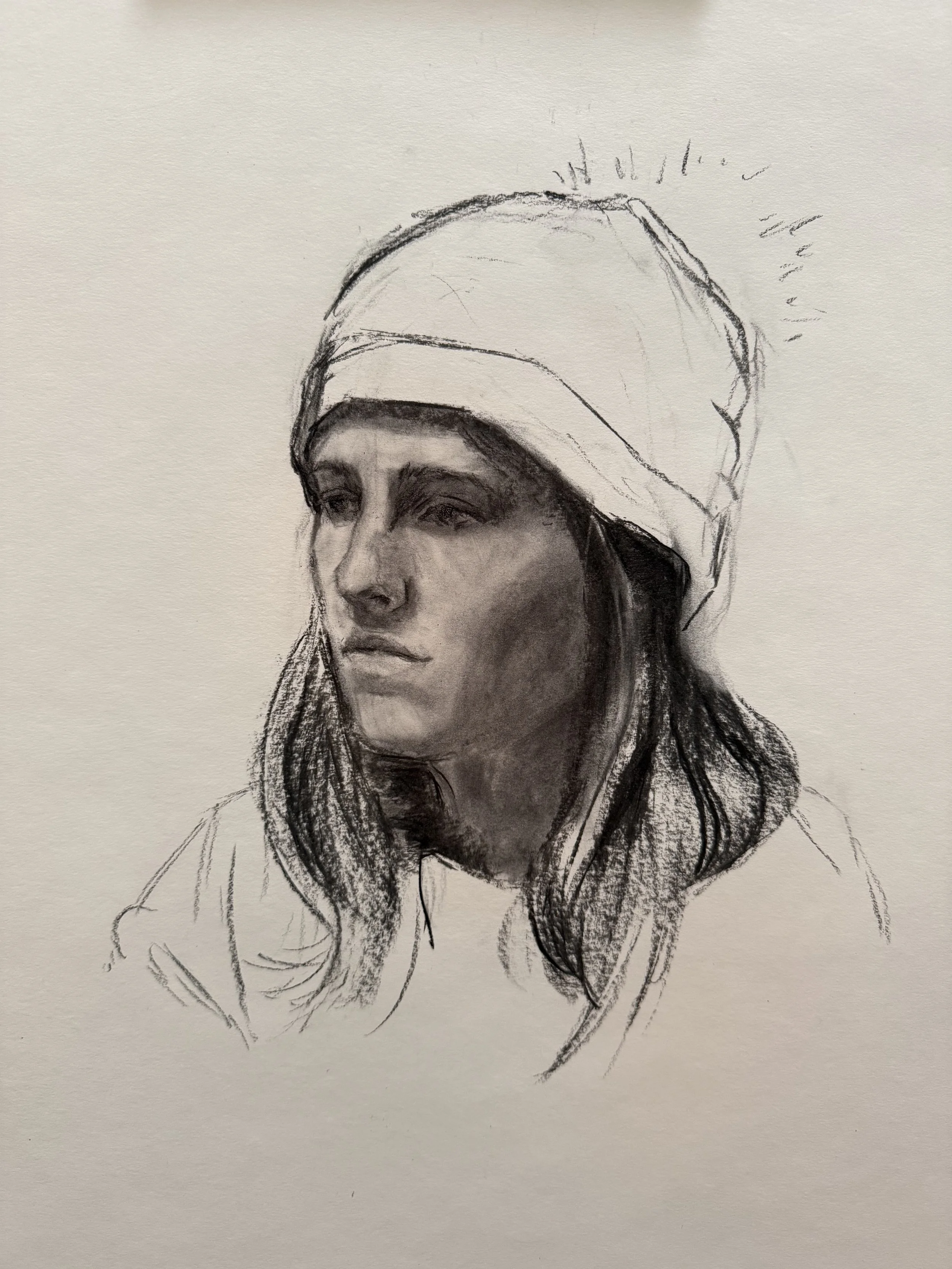
Continuing to refine.
I kept reminding myself that it's okay to embrace the natural texture of a drawing and to leave some areas slightly unfinished. I want everything I render to point the viewer back to the focal point: the eyes.
After the 3-hour session with our model, I went into my studio and continued refining the background. In total, this took about 3.5-4 hours. While it is far from where I want it to be, I do see some improvement from my first attempt. I'm excited for this new challenge this semester!
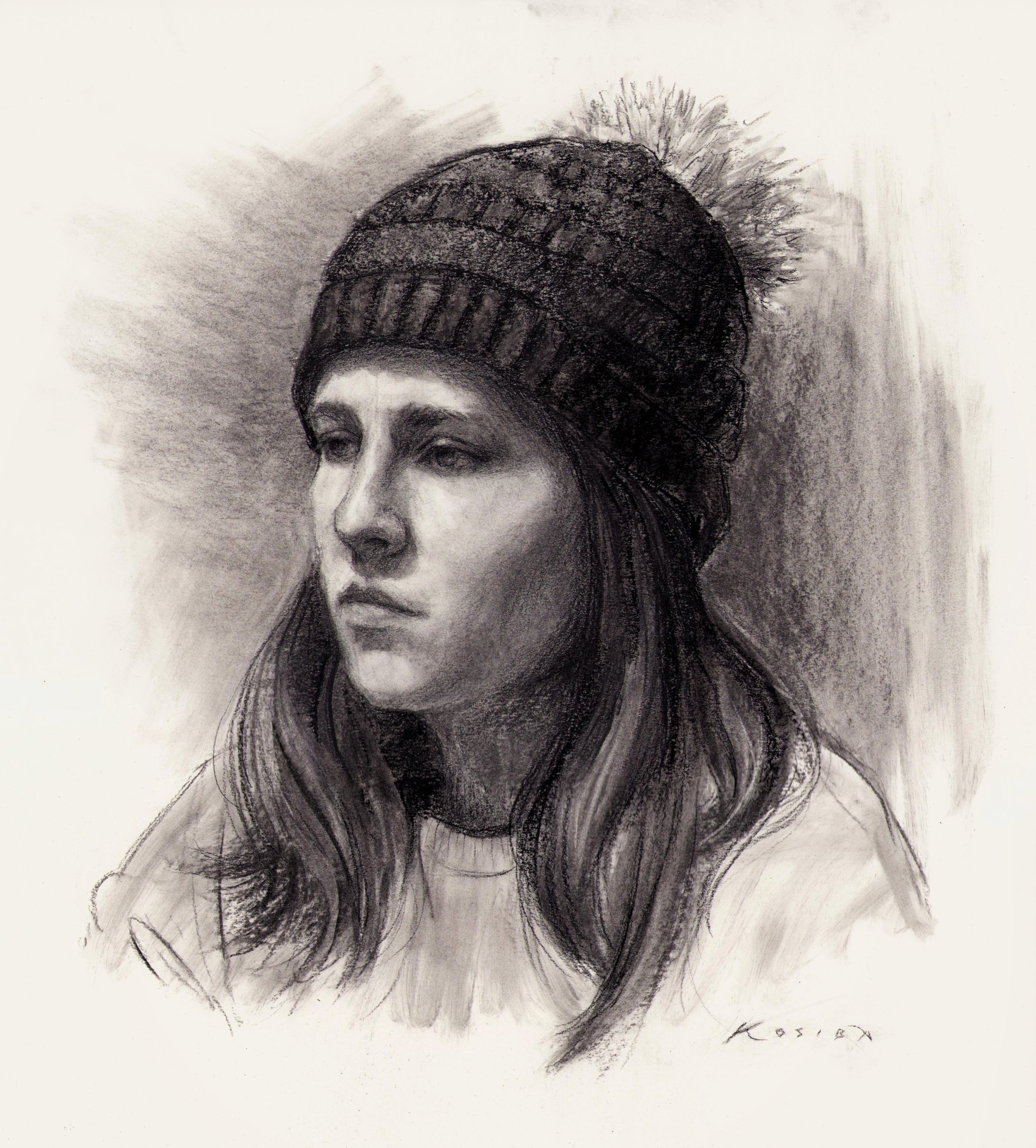
Final Drawing - 4 hours
