
I’m happy to report that the creative burnout I’ve been slogging through has finally ended! Sorry for the past two weeks of burnout blogs.
I think a huge reason I’ve had this breakthrough is from literally touching grass – let me explain.
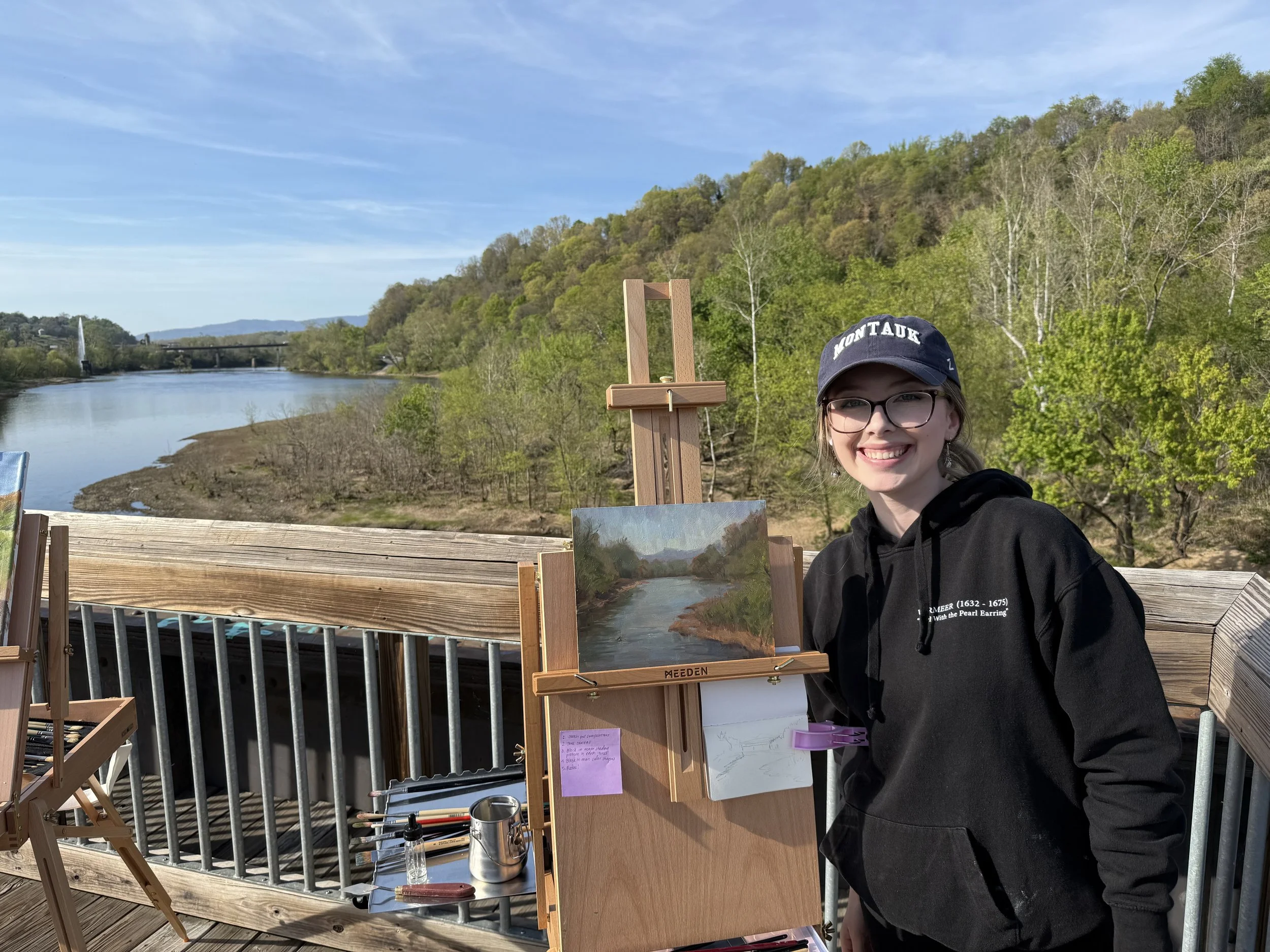
This week, the graduate class I’m in was tasked with going outside to do plein air painting at some point during the week.
As much as I have painted many portraits in oil, I have not done many landscapes. The ones I have done were in the nice, comfortable, air-conditioned setup of my little art studio.
Taking all of the necessary supplies, carrying them to the painting location, and creating a finished painting in about 3 hours is no small feat, as I soon discovered this week. These constraints take what you might have been comfortable with and turn it on its head.
Though there were certainly some challenges (dealing with direct sun on my palette and canvas, bugs diving into the paint, trying to simplify complex, indistinct overlapping shapes), I found myself loving this process.
Hearing the water flow below us, the birds chirping, and the light conversation of passersby people, all while taking in the sun, led me to believe that this is what we’re meant to be doing (instead of being stuck in an office all day without any sunlight). Replicating God’s creation while being physically present within it healed me in many ways last week.
The Setup
As my friend and I packed up all of our supplies for our outing, I realized just how many things there were to remember! Luckily, I spent the day before watching videos from experienced plein air painters who gave some pro tips on what to bring. Other than the more obvious painting supplies, here are the ones that I would not have thought to bring:
Plastic bag for trash
Notebook and pencil for sketching compositions
Fold-out wagon for hauling supplies
Small box for wet painting (I forgot this for the first session)
A baseball cap to shield your eyes from the sun
Heavy-duty canvas clips
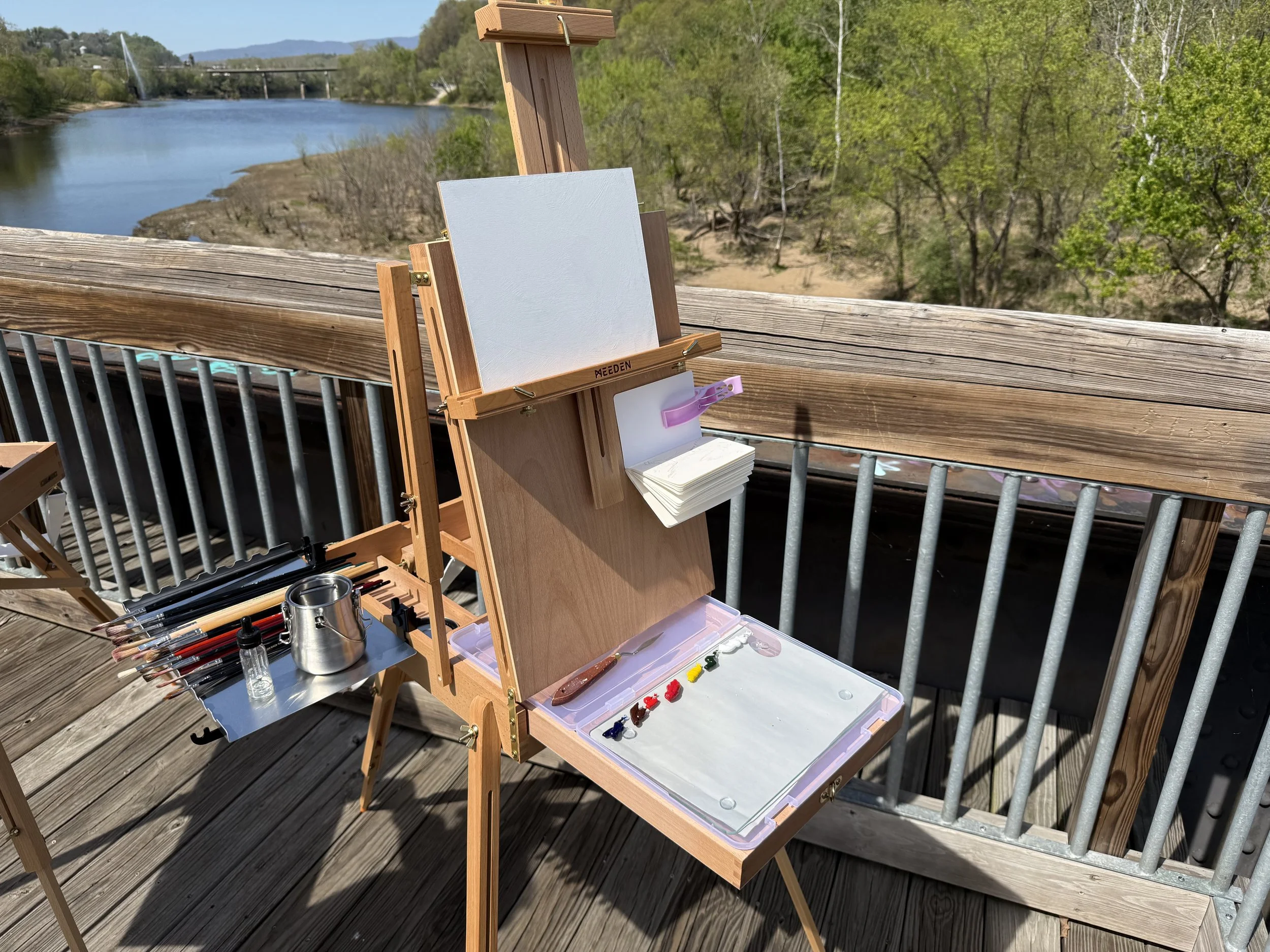
My setup before getting started.
After this session, I would like to add several things to the rotation. Firstly, a fold-out stool would help me take some necessary breaks during the painting. Since I’m doing this after work, I would like to give my feet a break.
While this painting was on a cool, breezy day, I can imagine how uncomfortable this would be on a truly hot day. I want to purchase a small travel fan that I can clip onto my easel. There seem to be a few rechargeable ones for pretty cheap.
Eventually, I would love to lighten my setup. I did some research on pochade boxes, and this might be something I have to buy in the future. I am all about optimizing and simplifying my setup. Anything to make me more likely to put the effort into actually doing it.
The Process
Firstly, I toned my canvas with a wash of transparent oxide red and a touch of ultramarine blue to take away the bright white of the board. Then, in my notebook, I quickly sketched out my composition, making sure to modify things as necessary.
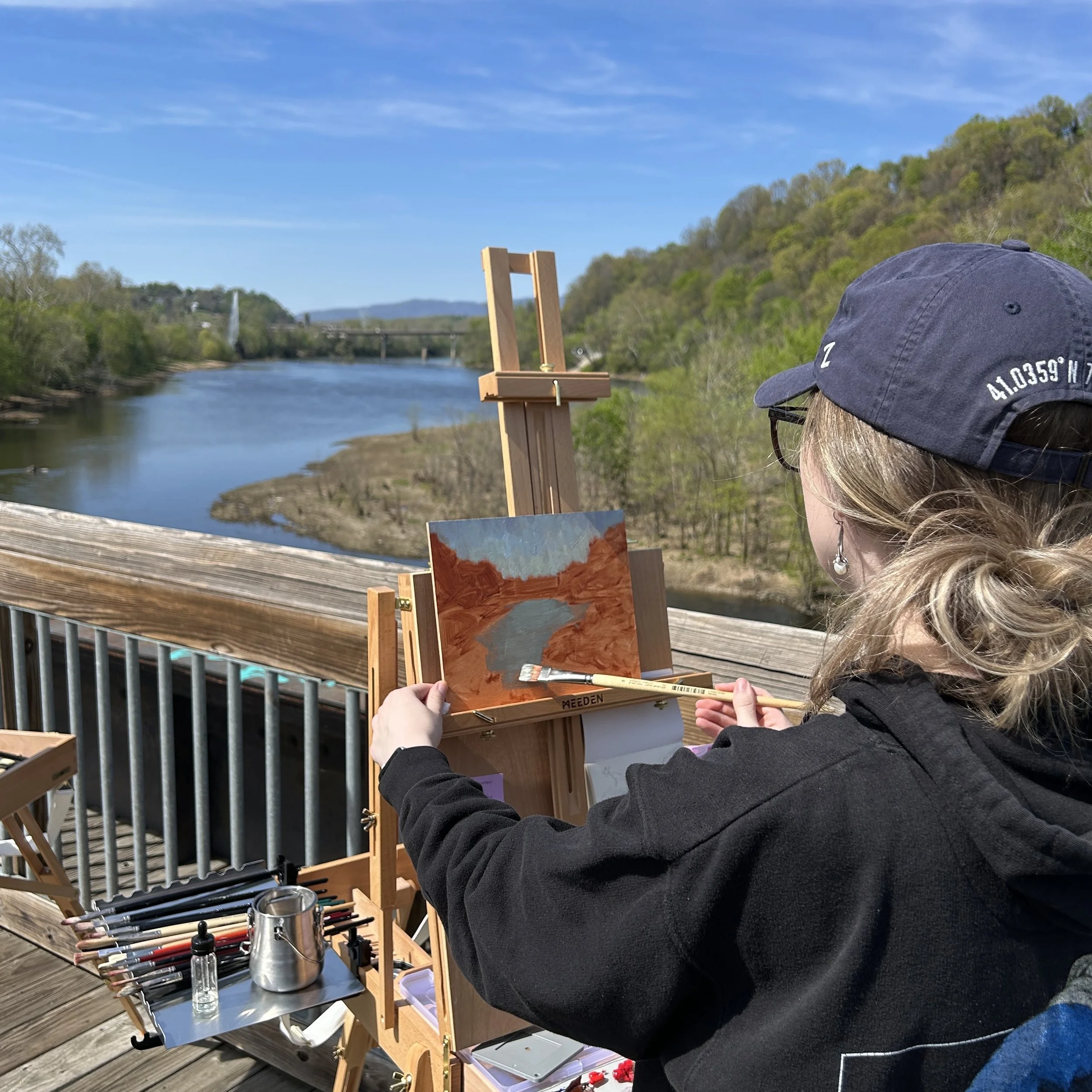
Once I had this sketch transferred over to my canvas, I started by getting the sky blocked in. I find this helpful when establishing all of my other values. I then massed in the major color blocks, moving from back to front.
I struggled most with the foreground, since it was mostly just bare overlapping branches I decided to add more green to this area, and to just hint at the branches below the green.
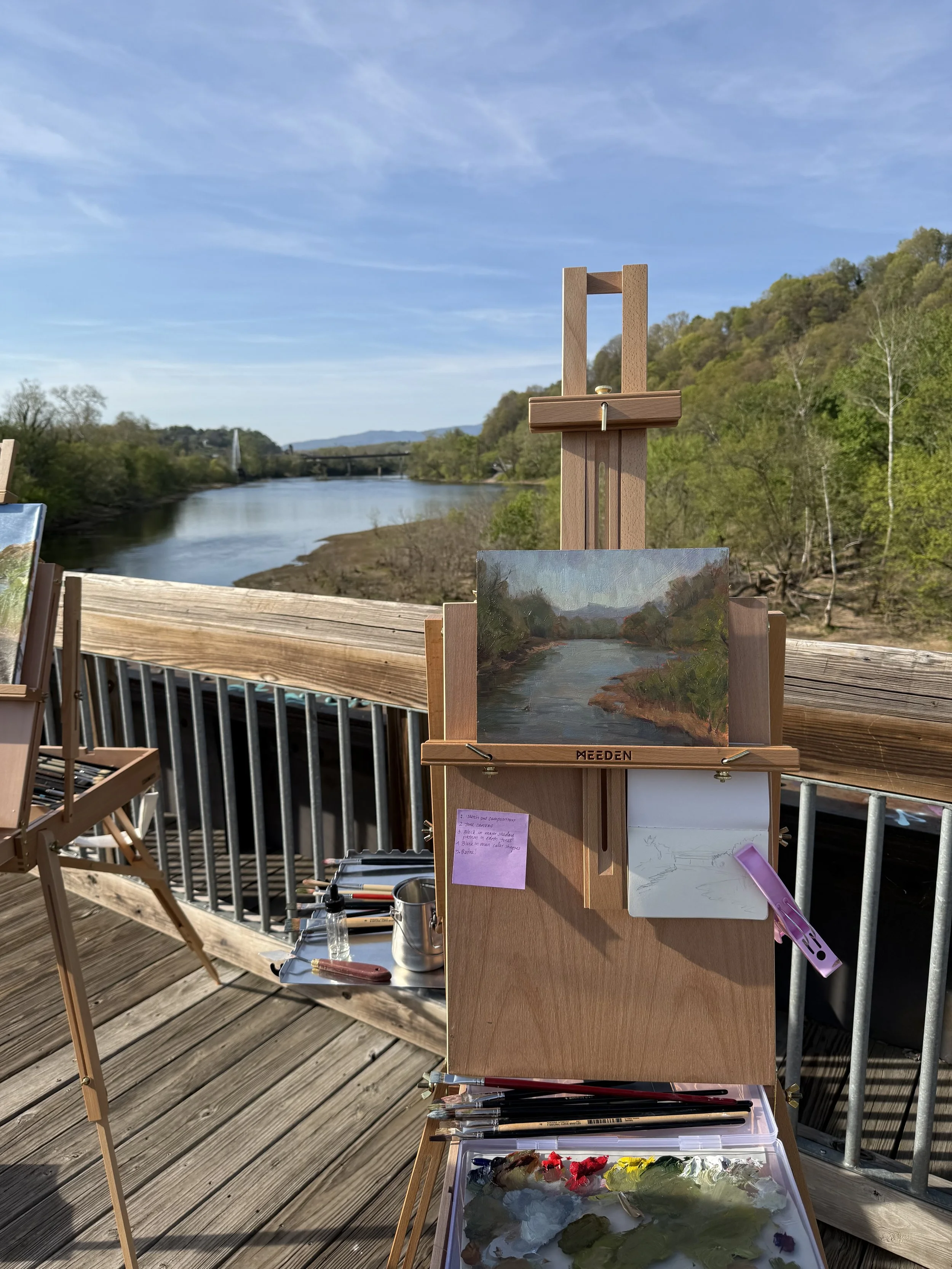
Next time, I would like to start with thinner masses of color. Additionally, I would like to use the darkest value in each foliage section as the mass of value. Keeping the darkest values thinnest prevents glare and allows for thicker highlights to be added on top.
While this painting feels more like a study to me, there is a looseness and energy to it that I like. The time constraint allowed for me to not be super nitpicky about each brushstroke. I had to keep moving, which helped me not get too tight.
This session allowed for me to get a taste of this process, and I loved it! Stay tuned to hear about my next session.
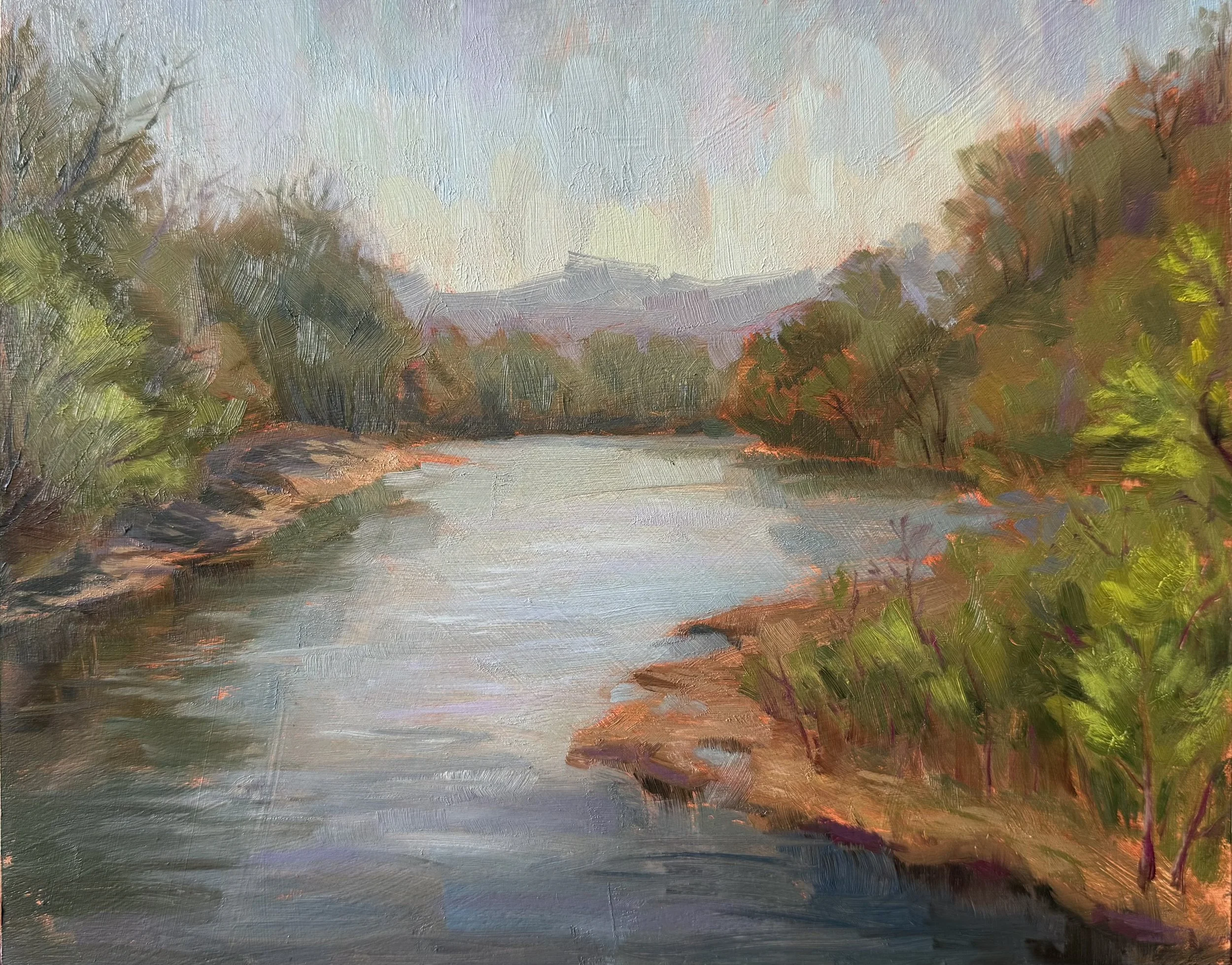
“Percival’s Island” 8×10, Oil on Wood
