
Painting at the Forest Library
This week, I ventured out to the Forest Library with my friend to paint the scenery. It was a nice, sunny, slightly hot day. Thankfully, we found a nice shaded area on the grass. A light breeze carried us through this session.
Something I wasn’t prepared for when plein air painting is how many people want to know what you’re up to. During this session, these two little girls came up to us and politely asked if they could see our paintings.
In chatting with them, I told them that we get to do this for our homework! And then it hit me: here I am, enjoying the sunlight, a gentle breeze, birds chirping, and painting all for my schoolwork.
I am just so grateful that I get to keep doing this. While it is sometimes difficult working in an outdoor session in the middle of the week, it’s better not to lose sight of how cool this all is.
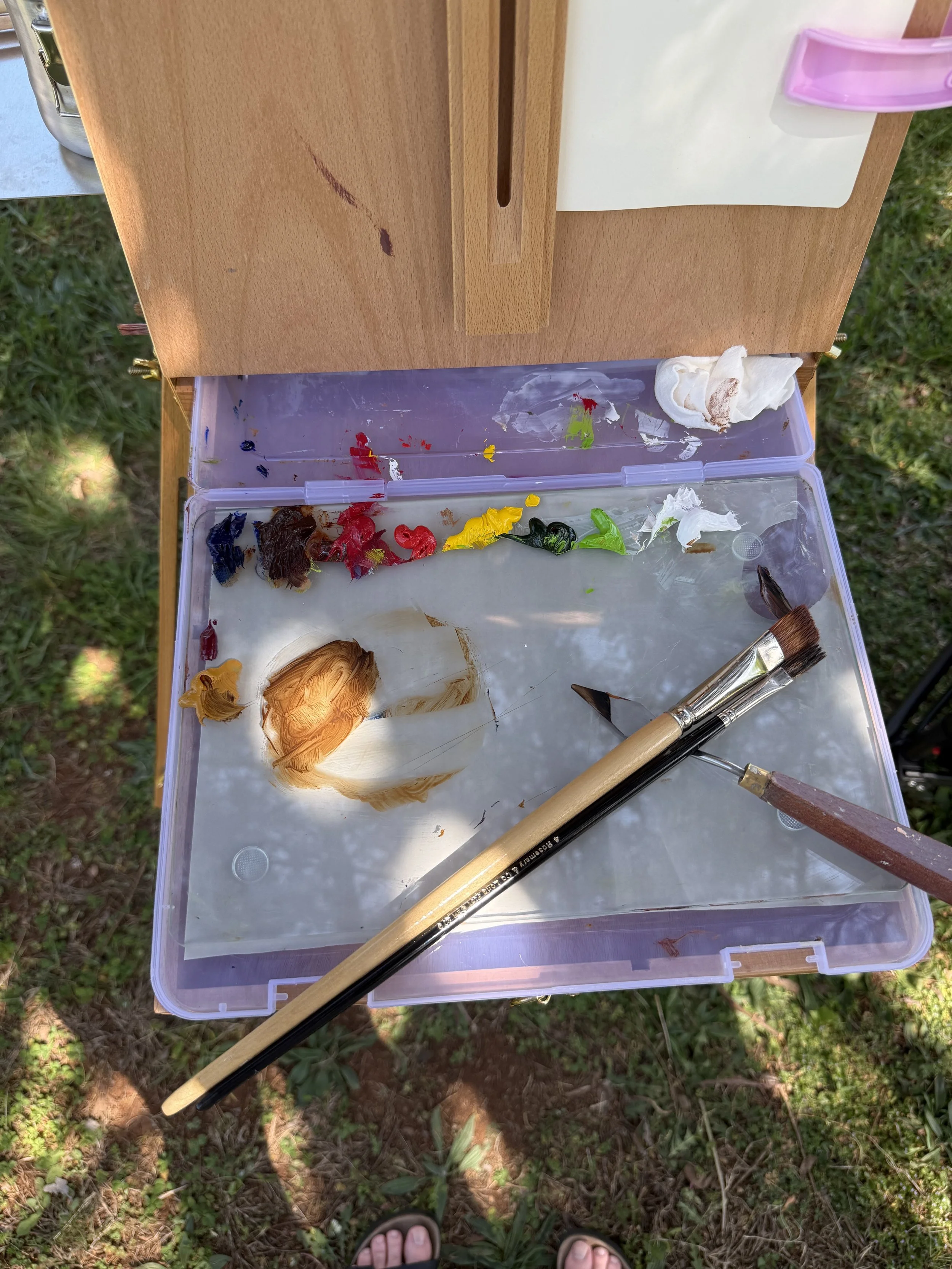
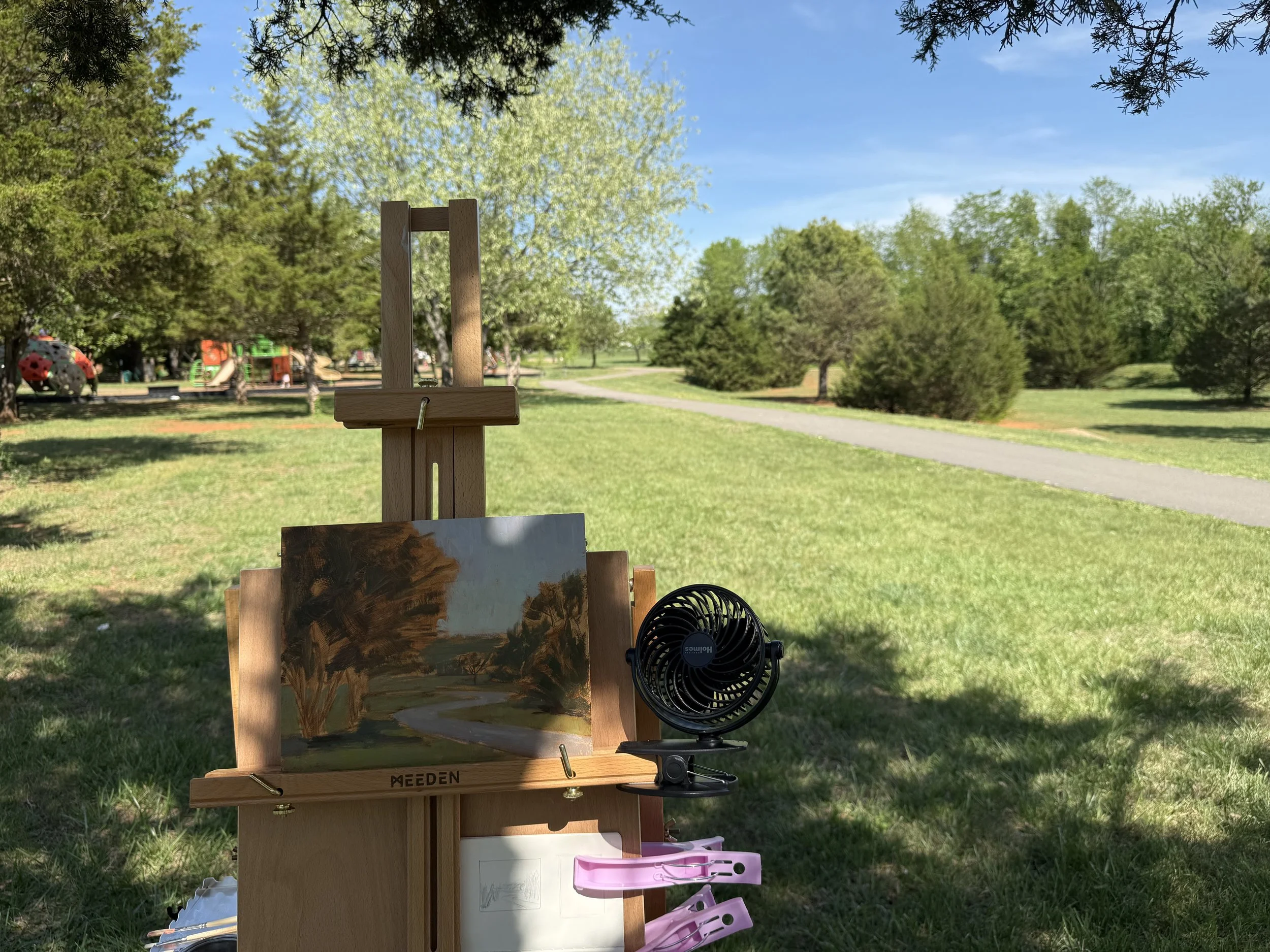
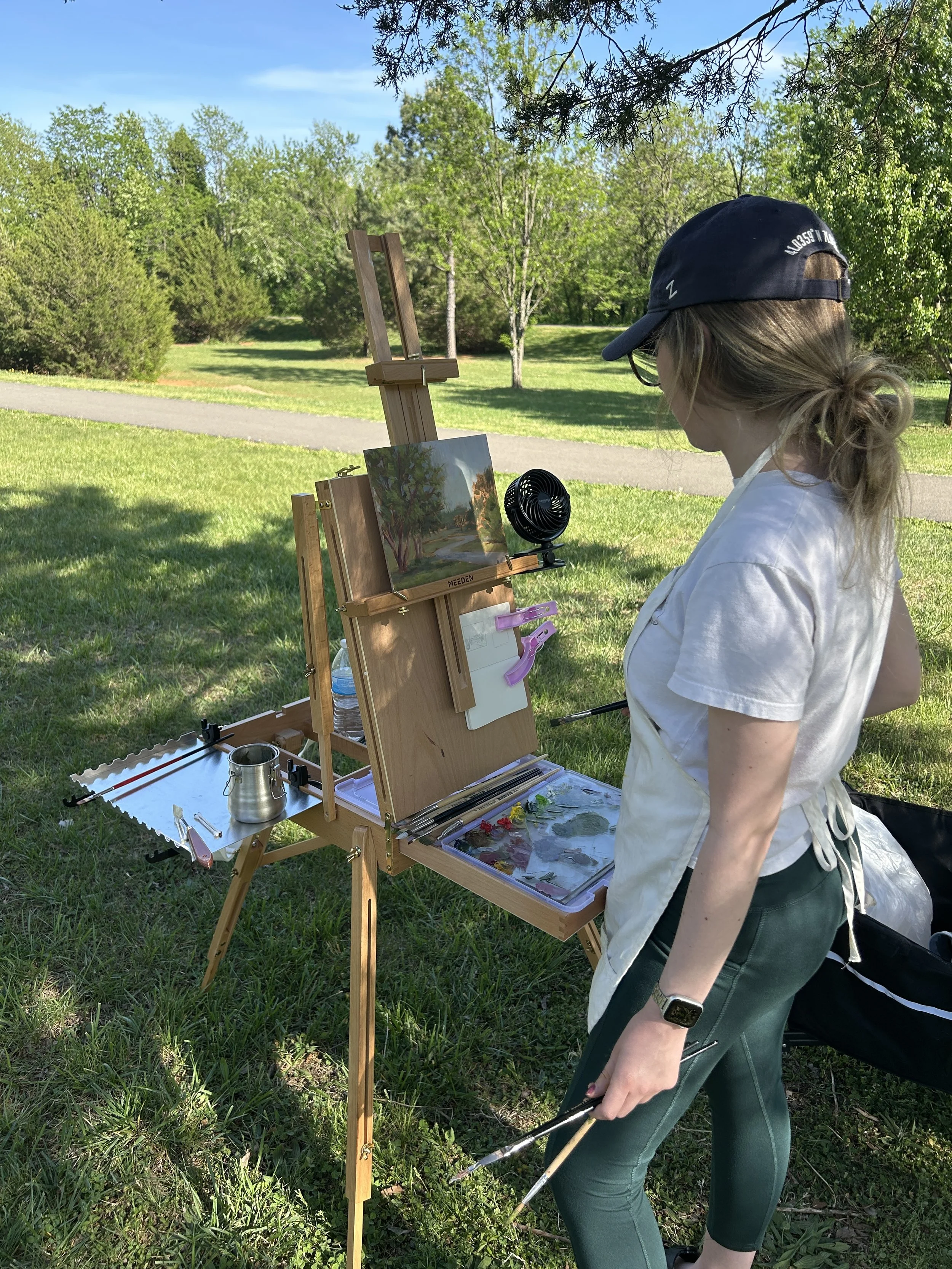
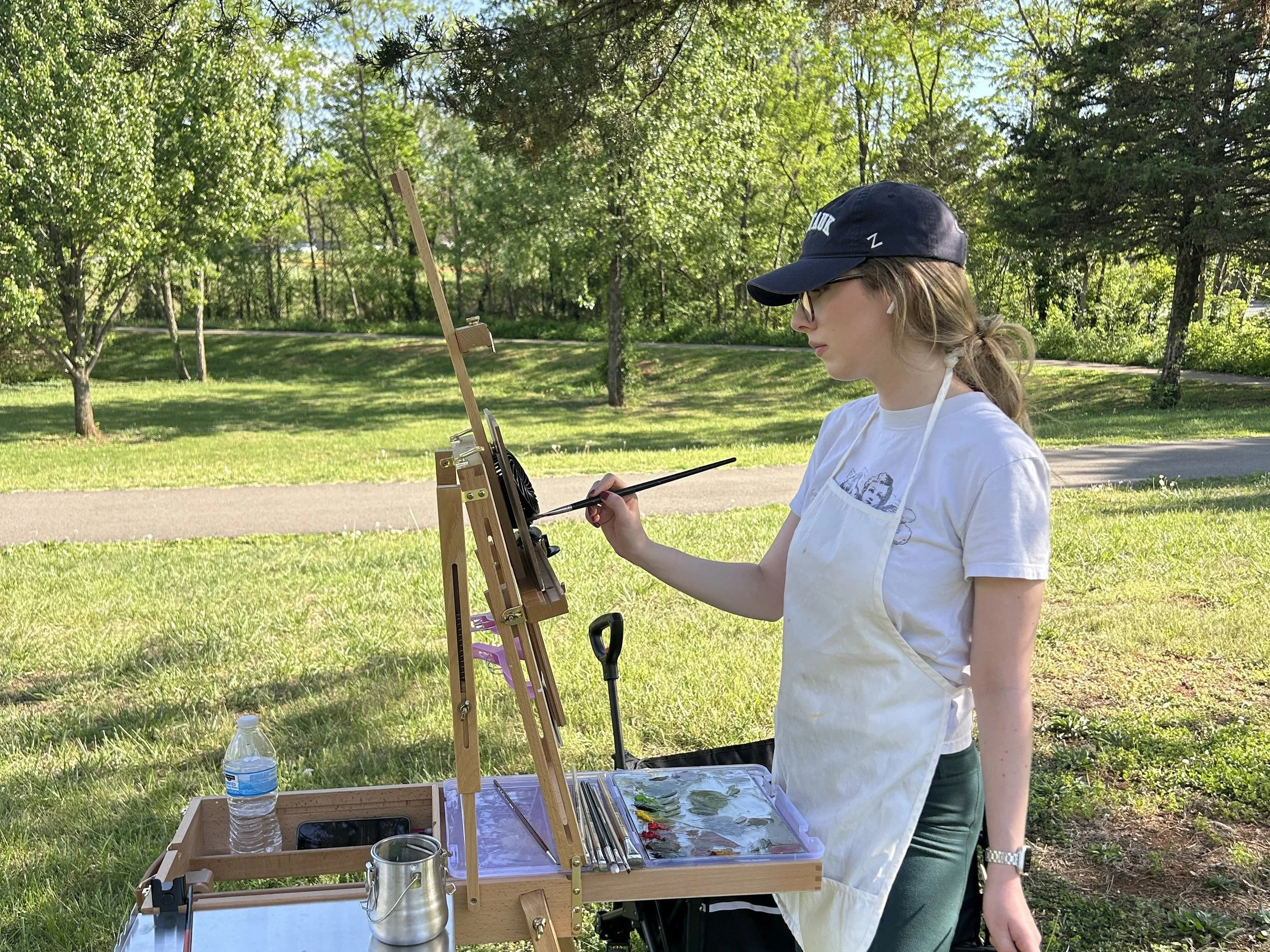
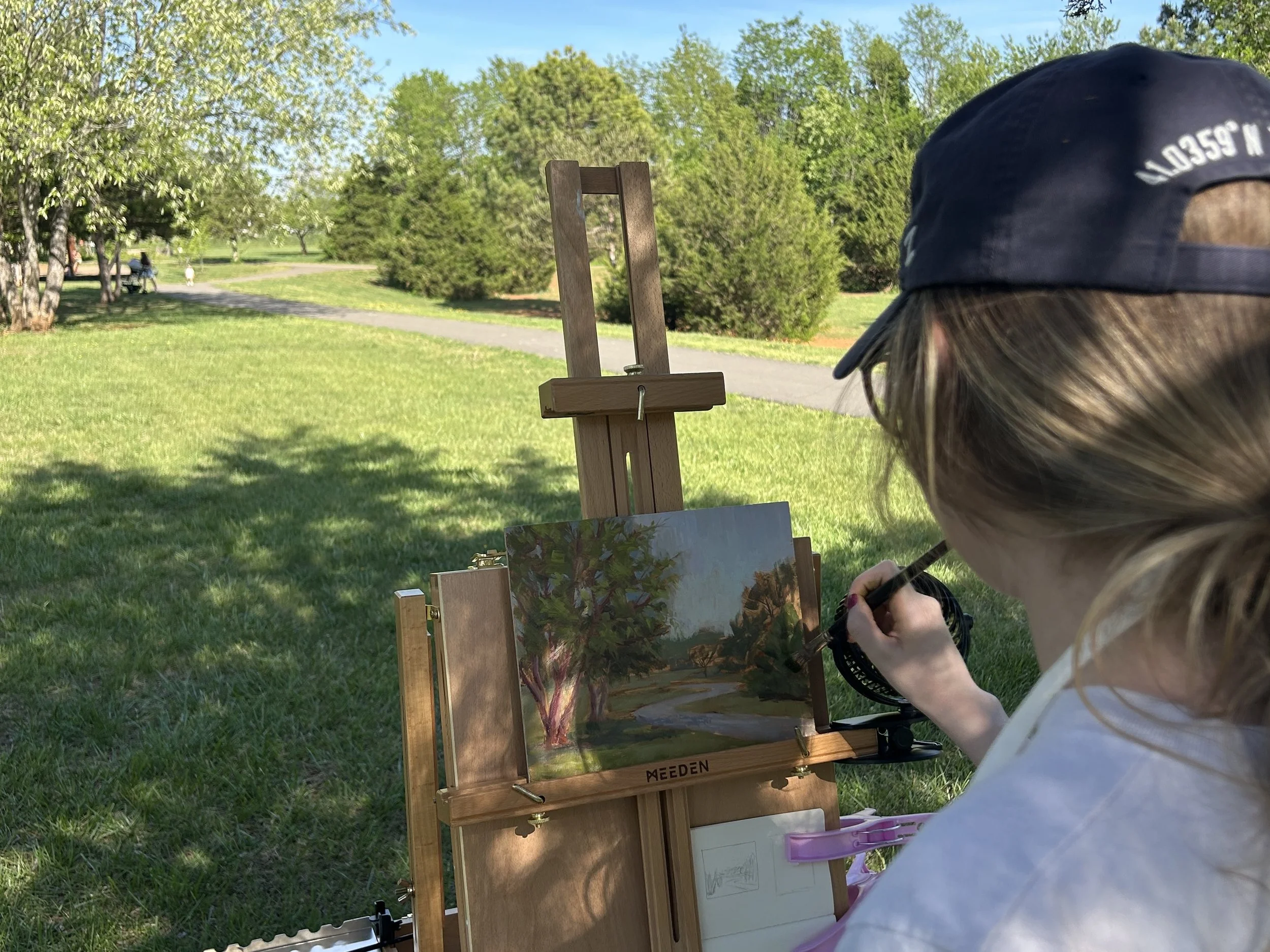
The Process
I felt less anxiety going into this session. This time, I felt myself let go of the pressure of completely finishing in one singular session. This allowed me to think through each stroke and not worry too much about time.
I began with a light transparent oxide red wash on my board. As I waited for that to get tacky, I took some time to sketch out my composition in a small notebook. The main thing I wanted to work out is if I should make the composition vertical or horizontal.
Once I settled on horizontal, I got to sketching with more transparent oxide red. Last week, I really struggled with painting foliage. I made sure to consult several resources on how to paint foliage and trees, and came back with a strategy:
Block in the main simplified value structure of each tree in warm brown thinned paint. Think about where the sky holes will be. Let this get tacky.
Overtop, block in the dark greens (keep the paint thin). Let this get tacky.
Start blocking in some of the lighter greens. Leave the areas near the sky holes very thin.
Paint in some of the branches. Make sure these are broken up by leaves.
Paint in sky holes.
Continue refining greens, adding some midtones.
This method allowed me to simplify a complex tree. I’m happy with how this turned out. If I had not gone into this session with a game plan for the trees, I would have gotten lost in the many details of that tree.
One thing I noticed as I kept painting was how important it was to block in every major color and value. Color and value context impact the painting so much that it is vital to get the basic color and value statement down before investing too much time in details.
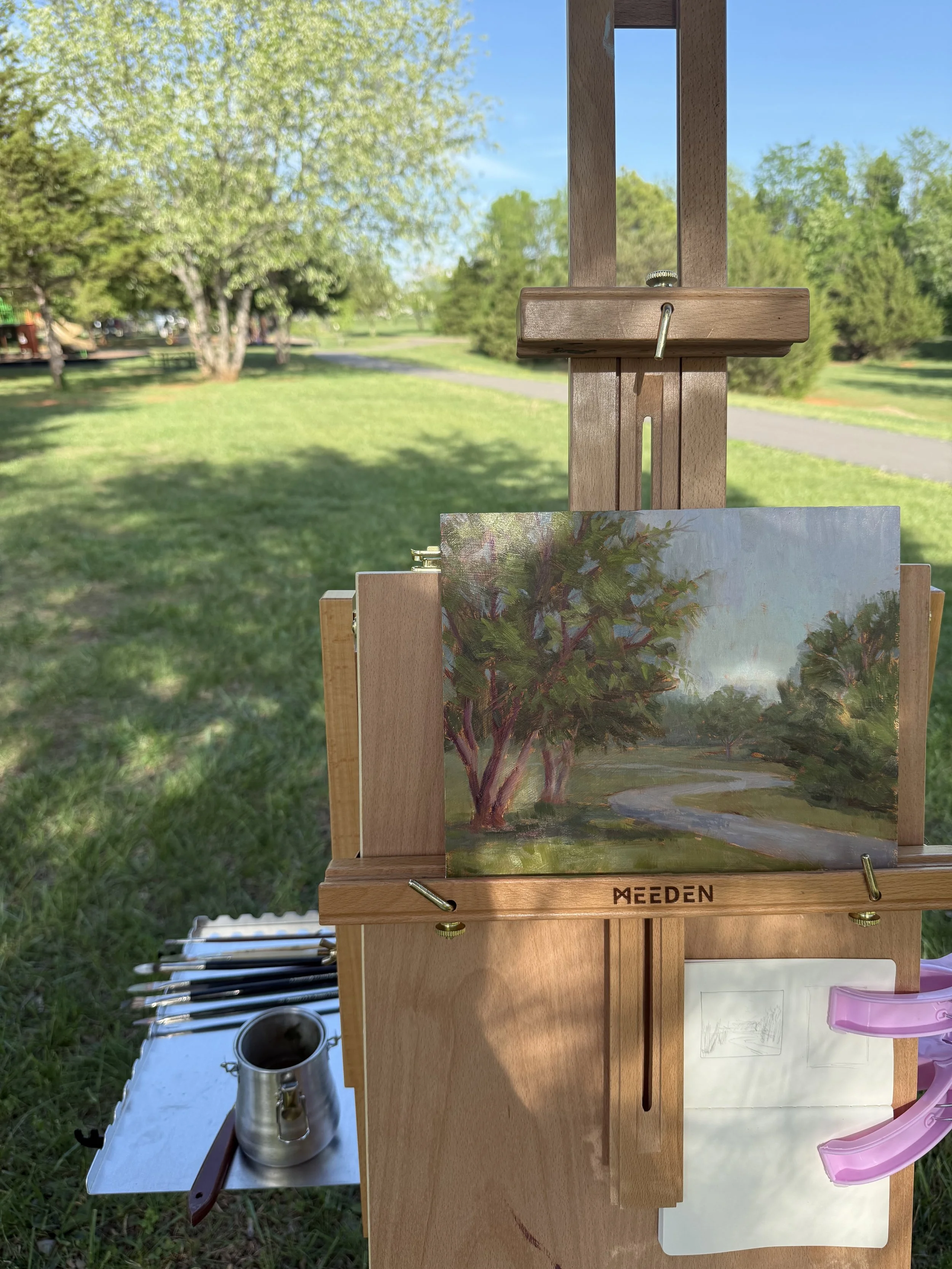
Painting at the end of our plein air session.
Another thing I noticed during this session is just how much the painting comes together once I started focusing on rendering the foreground. It really helps to anchor the rest of the scene.
After the foreground is rendered, I can bounce around and adjust the background as needed. Usually, I can leave it more ‘unfinished’ than I initially thought.
Another key observation from this week is how green is such a difficult color to master. When blocking in trees and foliage, I am so distracted by my brushwork technique, that I almost forget to integrate necessary hue variation and warm/cool greens. This is something that painters have to master to create beautiful landscapes.
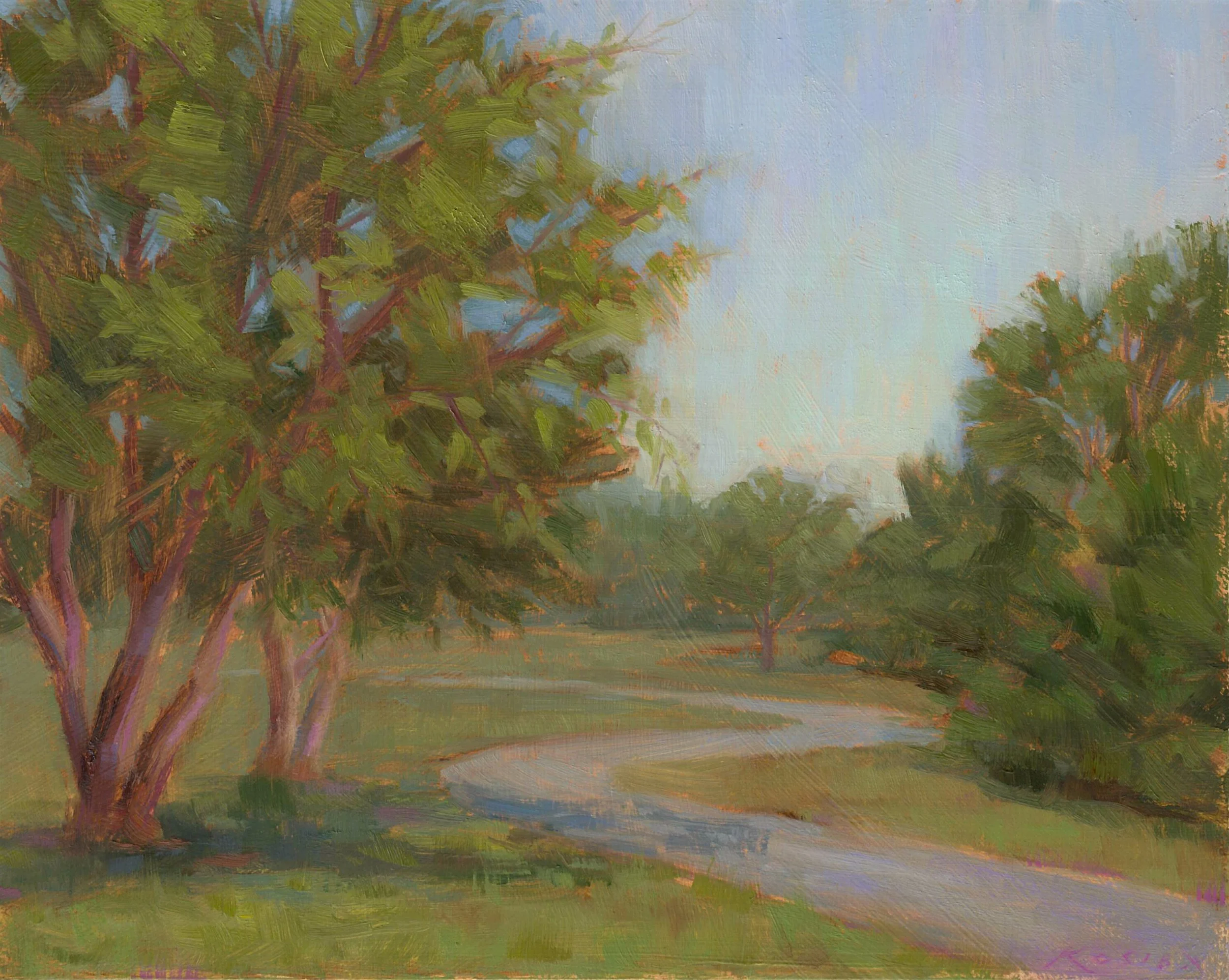
“Forest Library” 8×10. Oil on panel.
