
Painting Wherever the Wind Takes Me (Literally)
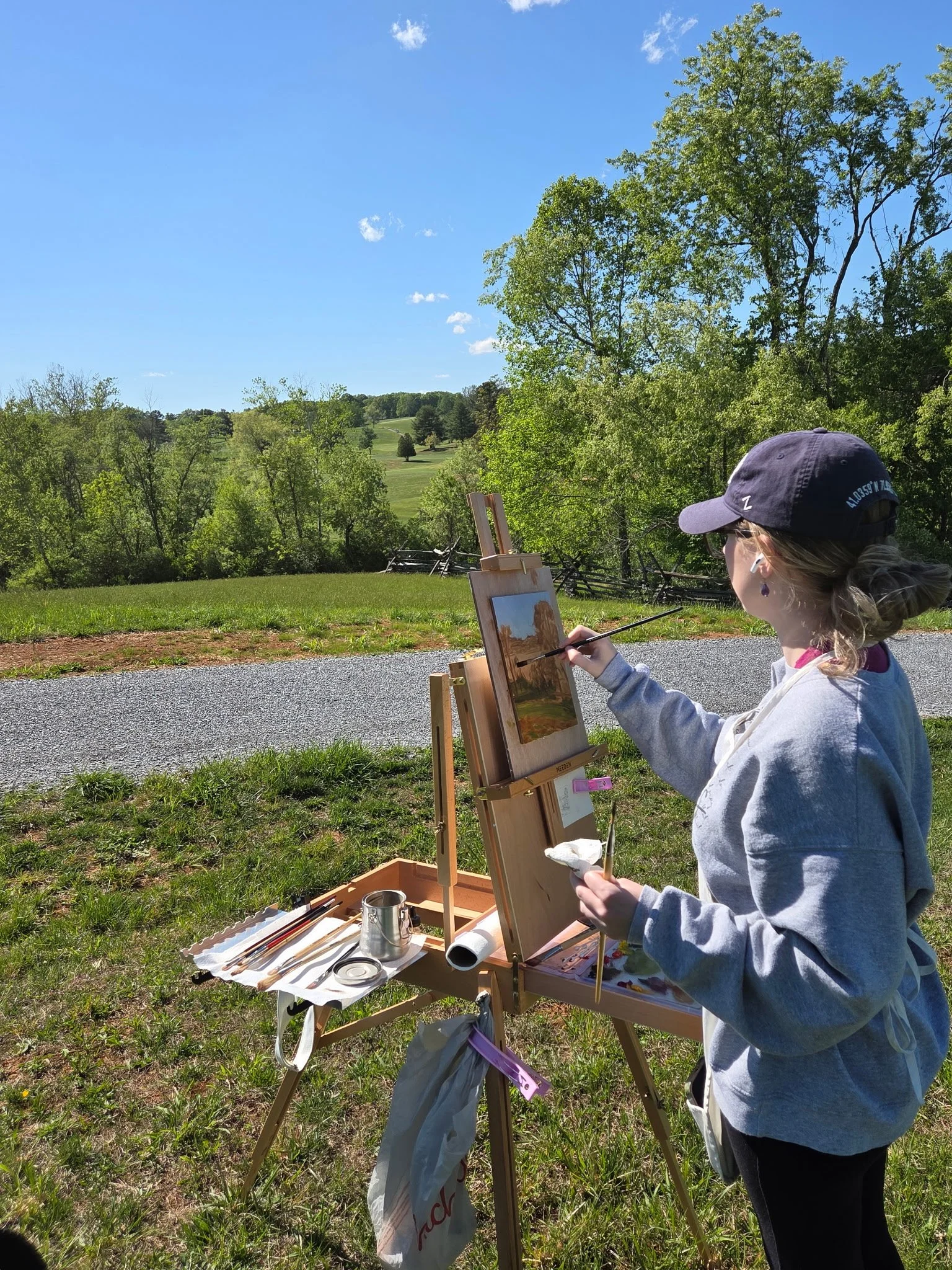
This week, I went to Thomas Jefferson’s Poplar Forest to complete my plein air painting. The rolling hills and towering trees were breathtaking! However, there was one thing I had not planned for: the persistent gusts of wind.
It was already a chilly day (don’t let the sun fool you, it tricked me into thinking I didn’t need to bundle up). As I loaded up my wagon and rolled down along the path, with all my supplies rattling along, I thought, “Surely the wind won’t be this bad the whole time, right?”
Wrong. The wind was pretty brutal. I tend to be a wimp when it comes to cold weather, but something about having a steady blast of dry cold air on my face was starting to make me lose it.
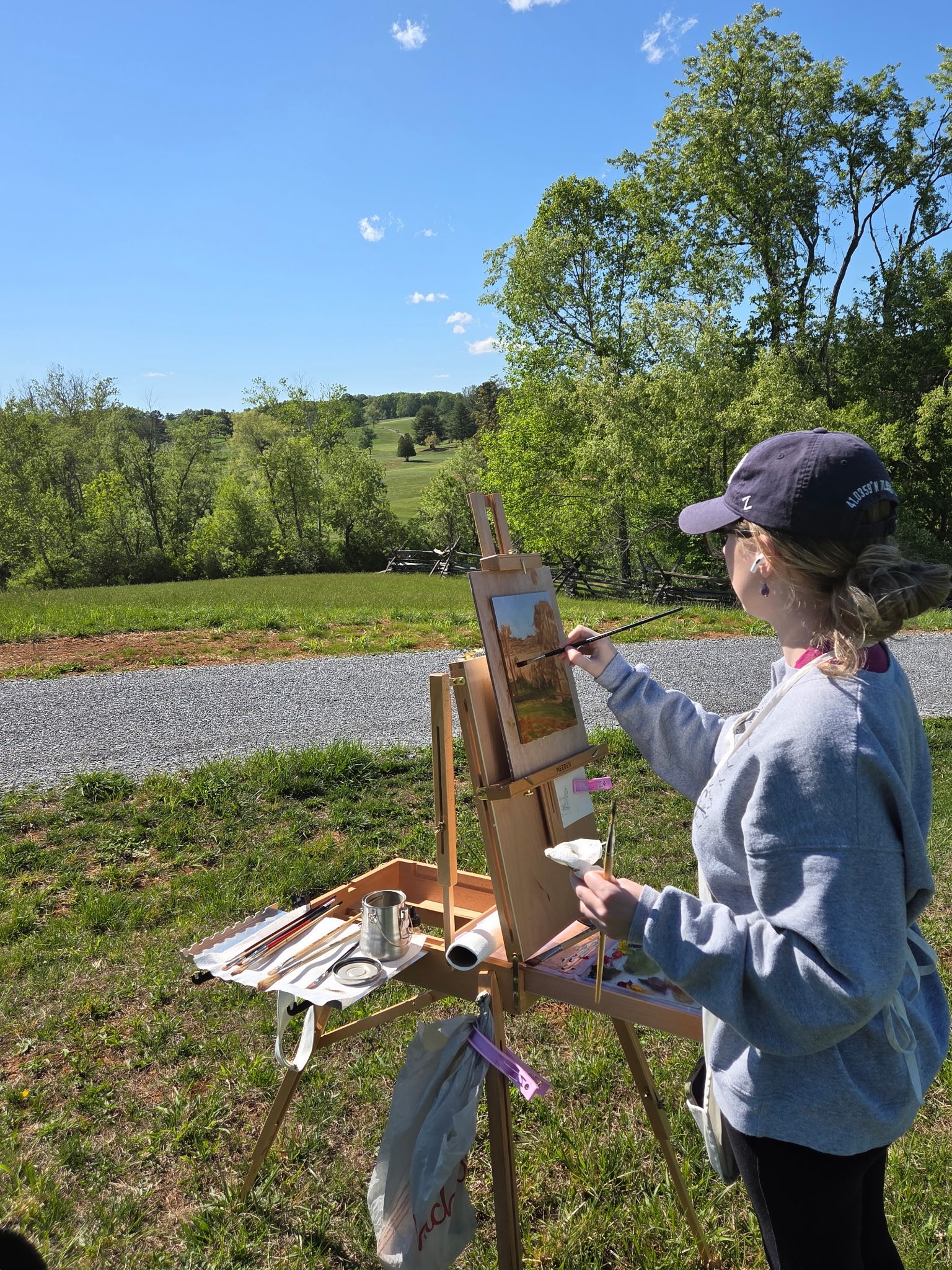
I was trying to stay present, despite my paper towels flying (don’t worry, none were left behind), my face drying up, and my hands going slightly numb. I was feeling overwhelmed and exhausted.
I got about halfway into my painting when I had a startling realization: have I been wearing my sunglasses this entire time? Yes, I was. I truly was at my wits’ end. I’m pretty sure I ended the session with half a tube of green paint on my hands and face, and only a half-finished painting.
I accepted defeat at about the 2-hour mark and called it a day. I took it back to my studio and made some refinements on another day (when I had fully warmed back up).
The Process
Once I had found a view that included a foreground, middle ground, and background, I set up my easel. I began by sketching out a long vertical composition in my notebook to figure out which elements I would like to include.
Once this was mapped out, I began with a wash of transparent oxide red, ultramarine blue, and a bit of quinacridone magenta. This is when I was able to sketch out the major shapes, with the goal of simplifying the larger tree.
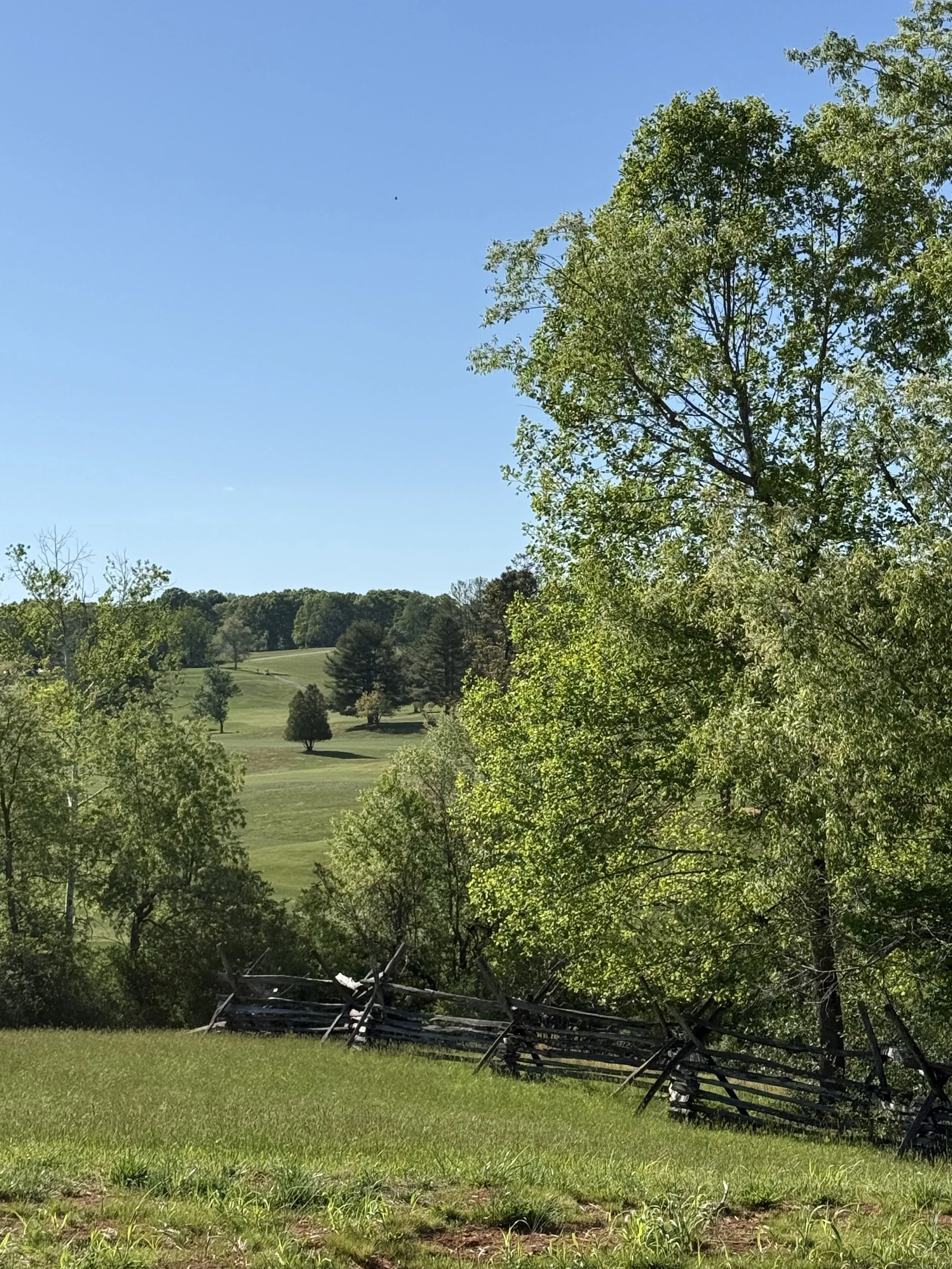
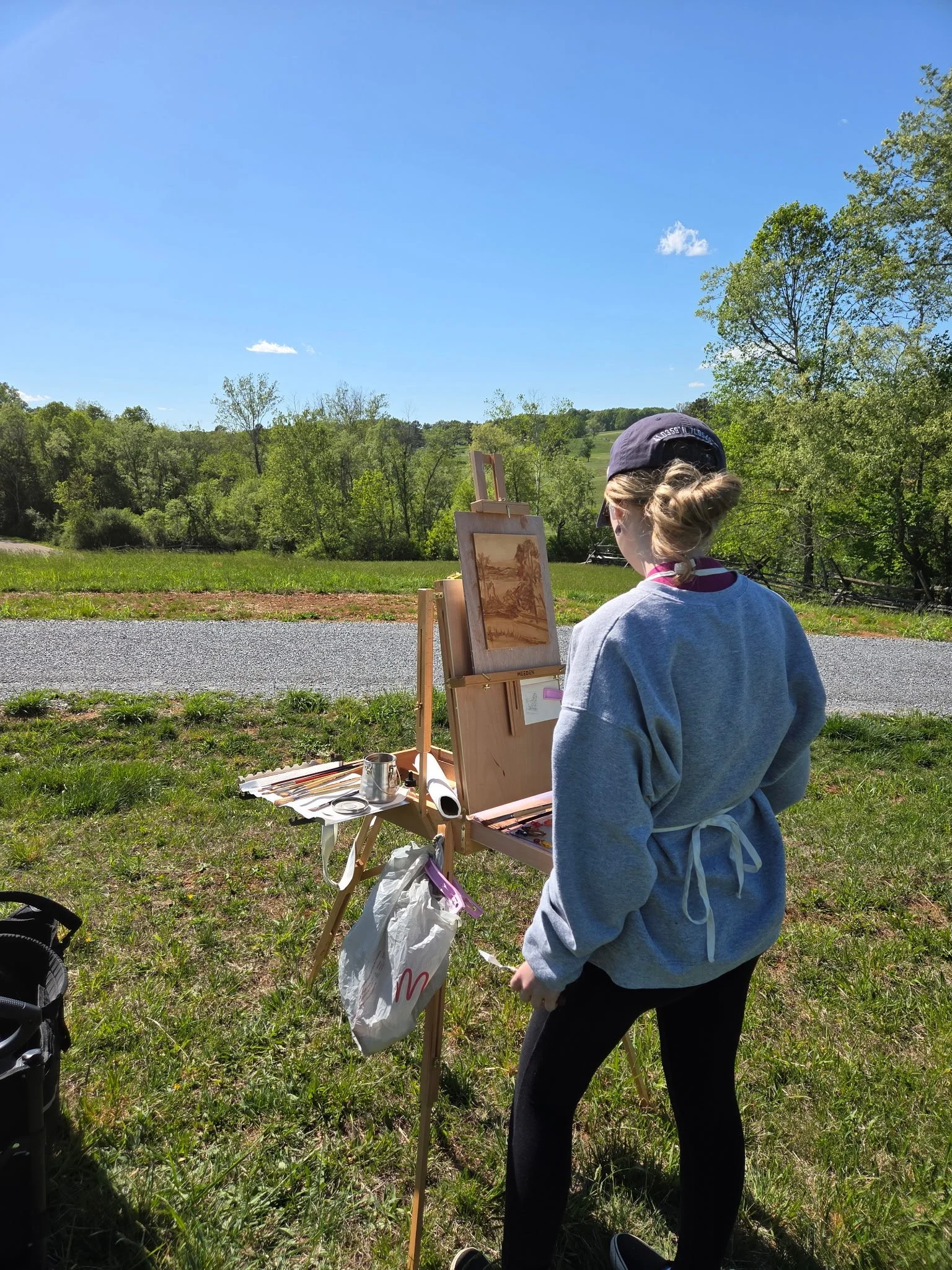
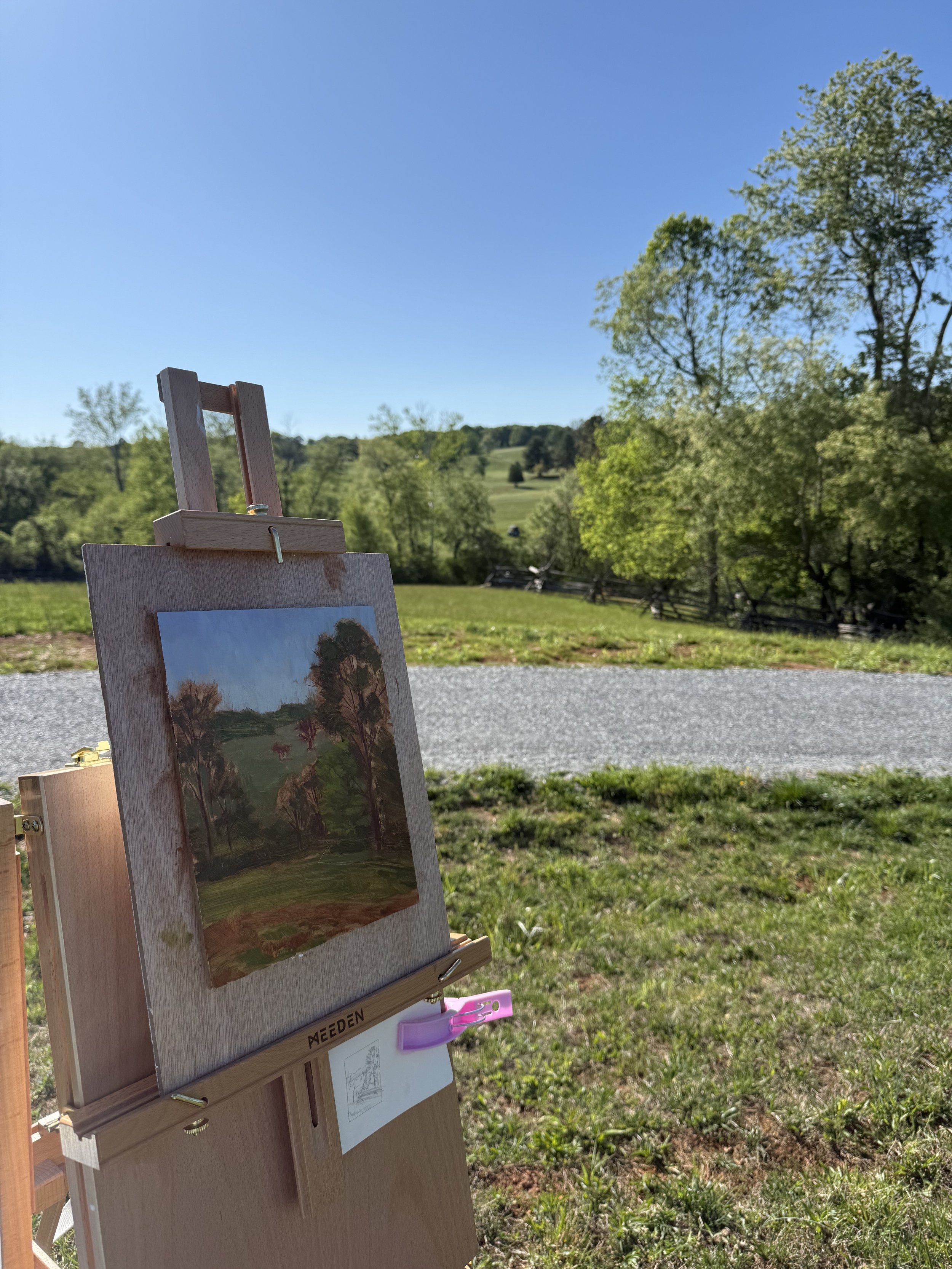
One thing I had noticed when looking at my scene is just how clear a day it was. There was not much of a noticeable change in value contrast due to atmospheric perspective. This is something I ultimately wish I had exaggerated a bit further. I mainly focused on exaggerating the color temperature, but the values would have been another great area to strategically manipulate.
Once that initial wash had gotten a bit tackier, I went over top and blocked in the major green mixtures, ensuring this paint remained thin. I didn’t go too light with these mixtures in the foreground, so I still had room to add some highlights.
Something I am continuing to work on is not letting any of my green mixtures get too pasty. I really try to avoid mixing in white to my green mixtures. I do think this tendency has caused some of my greens to look a bit too dark. I have also heard that working in direct sunlight can cause you to mix paints a bit darker than normal.
Additionally, I tried to make those green mixtures a bit cooler and lighter as they receded to the background to integrate more atmospheric perspective.
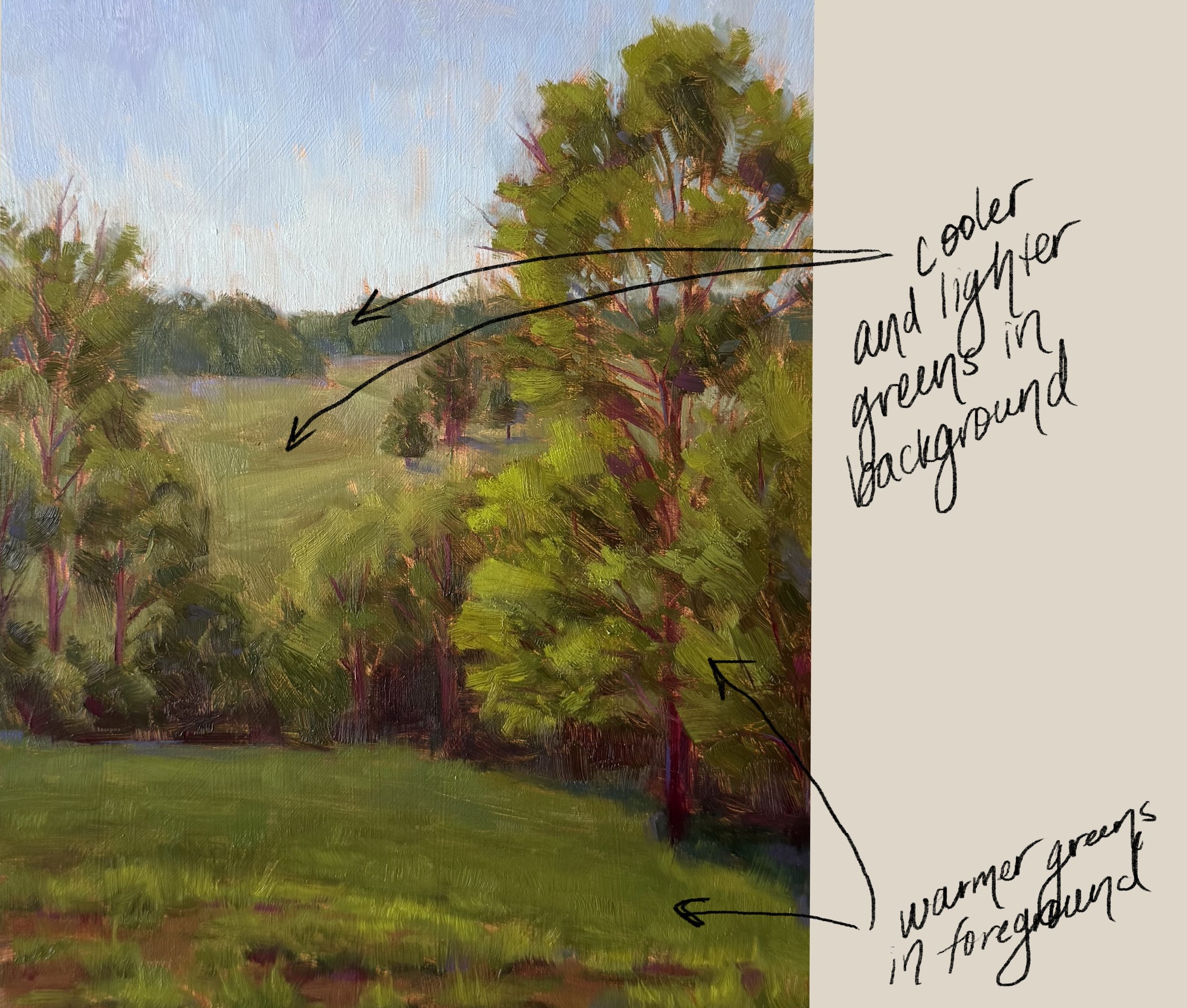
Ultimately, I am a bit conflicted with this one. I would like to do more work on the foliage in the middle ground, as this is getting a bit too unclear.
Additionally, I would like to continue to work on the ground plane in the foreground. Currently, it’s missing something. Maybe playing with more texture contrast and having some thinner areas poke through the more opaque paint would help. I also think some more color juxtaposition in the greens would help break it up.
Follow along as I work on my last plein air painting for this class next week!
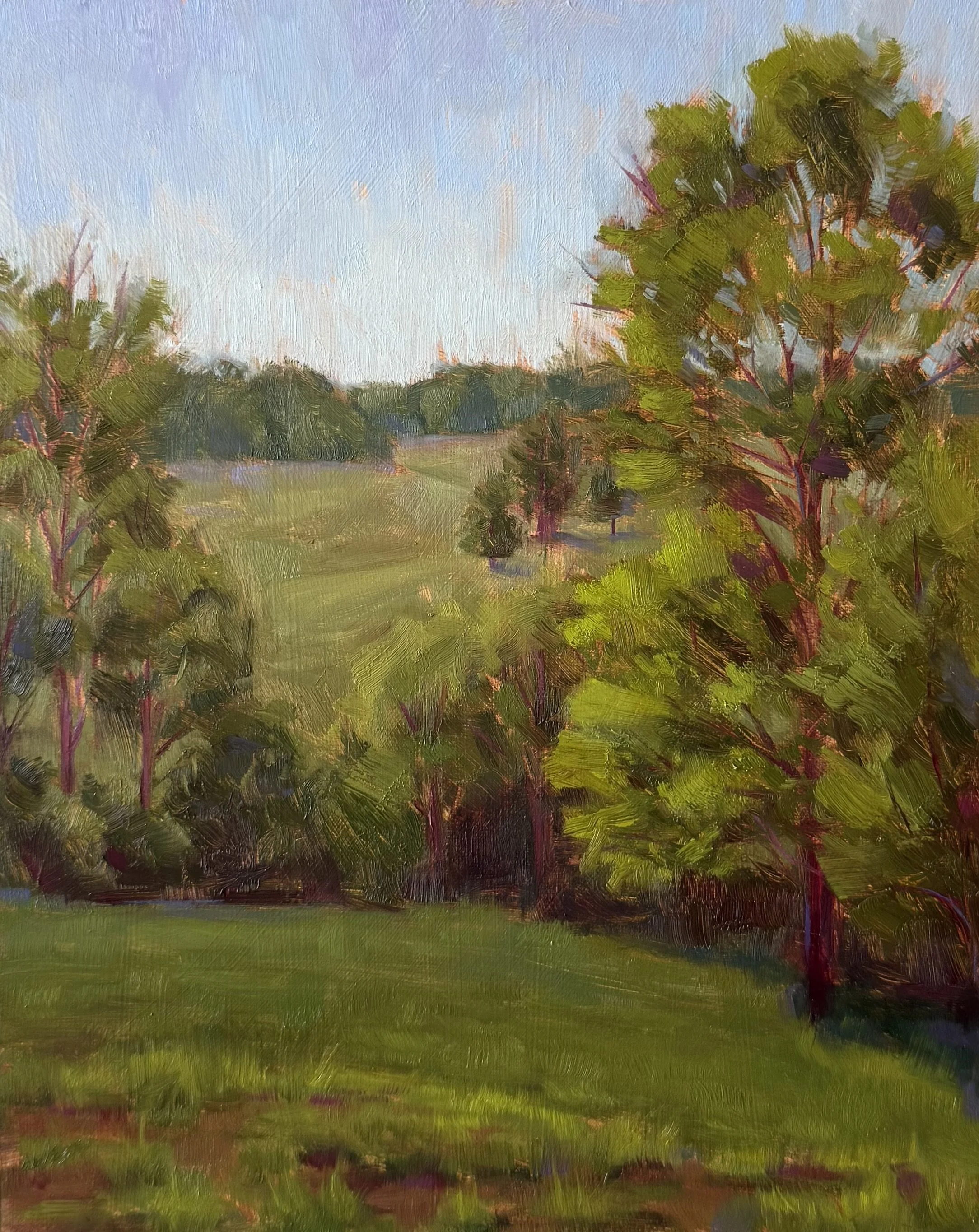
Poplar Forest. 8×10, Oil on panel.
