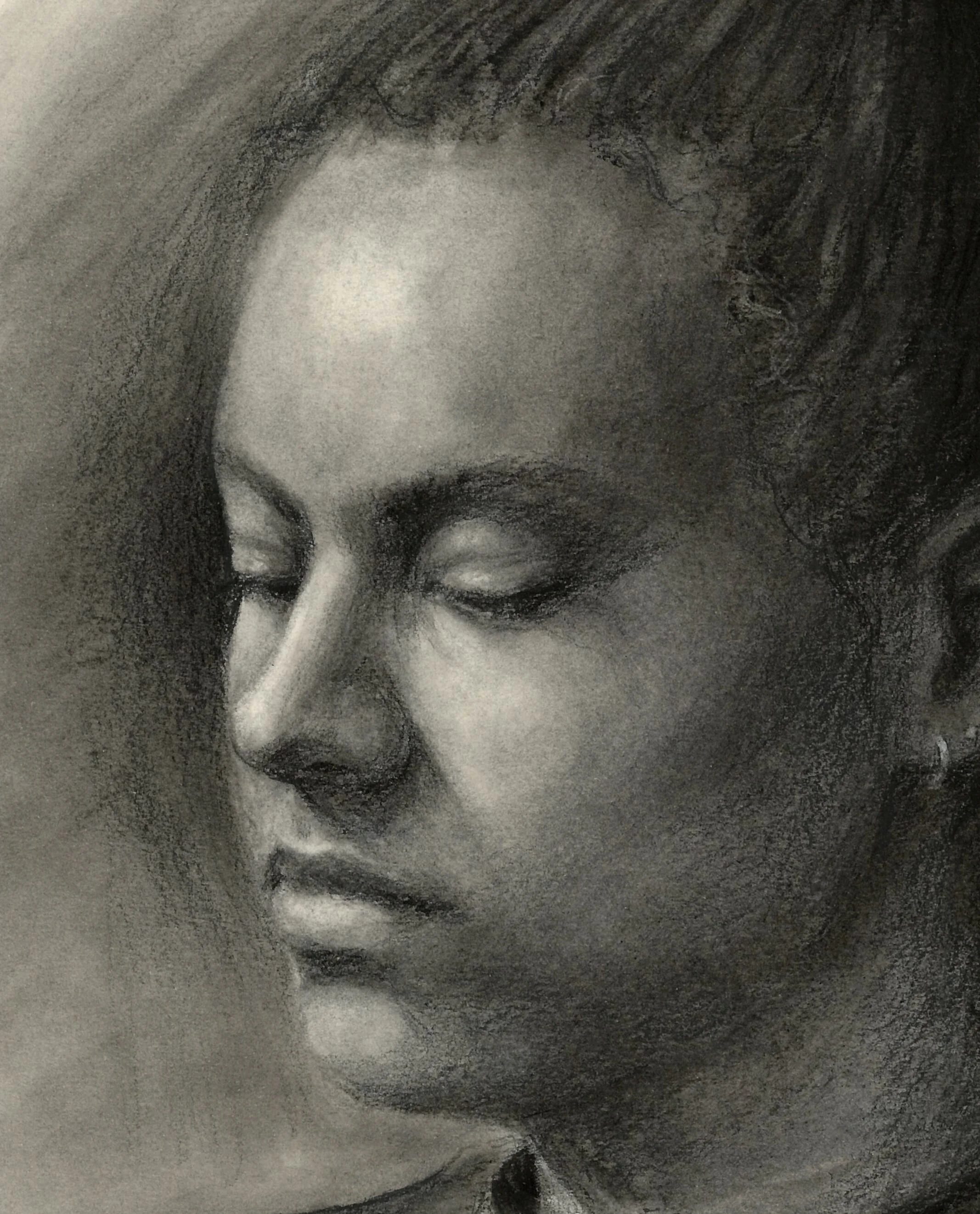
What differentiates an artist from a camera? If a camera can record things perfectly, what is a painting/drawing for? This is a question I’ve had to grapple with throughout my collegiate art journey, as I’ve moved beyond just technical replication of a subject into interpretation.
I find myself being drawn to artwork that truly has something to say. Artwork that shows a masterful and intentional use of things like lighting, values, line, color, and texture to create an engaging piece of art. Artwork that not only shows what somebody looks like but captured the feeling and personality of the subject.
I’m finally reaching a point in my artistic journey at which I’m learning how to interpret a subject: how to carefully select what to include and what to exclude; what to emphasize and what to let fade away.
When I first started grad school, I felt so lost artistically. You always hear people talking about “finding a style.” It seems to come so naturally to other artists. This pressure was so overwhelming that I decided to do what I do best: use avoidance as a coping mechanism and not think about it (not kidding).
What they don’t tell you is that this will naturally develop the more you study and practice. The more you start to think about how to interpret the subject you’re drawing, to push values, color, textures, and brushwork, the more your artistic voice will begin to grow (although mine is more of a whisper right now). This might seem obvious, but I don’t think I would have believed this if I had read this blog 2 years ago.
The Process
This week, when I sat down to begin my charcoal drawing from life, this question continued percolating in my mind. What differentiates me from a camera? What can I bring to this portrait that my camera could not? What are some specific things about this subject that I can use as areas of interpretation? How can lighting support these goals? What light/shadow pattern would make the most compelling portrait?
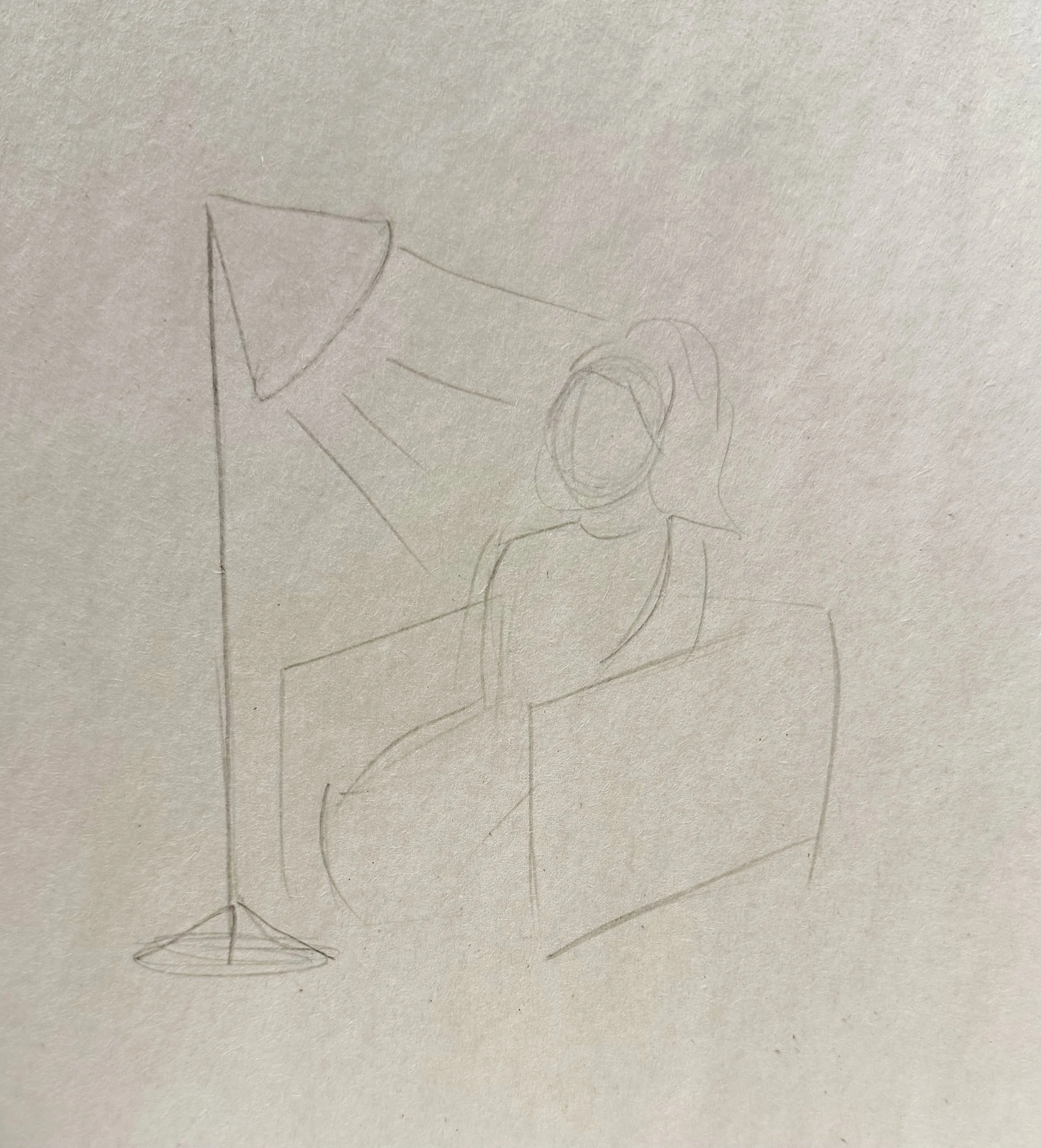
Lighting Diagram
At the beginning of our session, I arranged the light to face down upon the model, creating a strong cast shadow under the nose and chin. I love lighting my portraits to show the 5 darks of the face (eye sockets, nose, top lip, under bottom lip, chin). This creates a strong value contrast that communicates the form. Additionally, we dimmed the overhead lights so they would emphasize the contrast, while still providing partial illumination into the shadows.
During the beginning stages, this question of artistic interpretation must go on the backburner. This stage is all about careful measurement of proportion and shadows. If this stage is off, the rest of the drawing will only further cement these inaccuracies. I will not be able to look at it and see anything but the proportional inaccuracies. Maybe it’s all the years of doing this kind of grading in student work – I can’t shut that side of my brain off. That’s a lot of pressure for this stage!
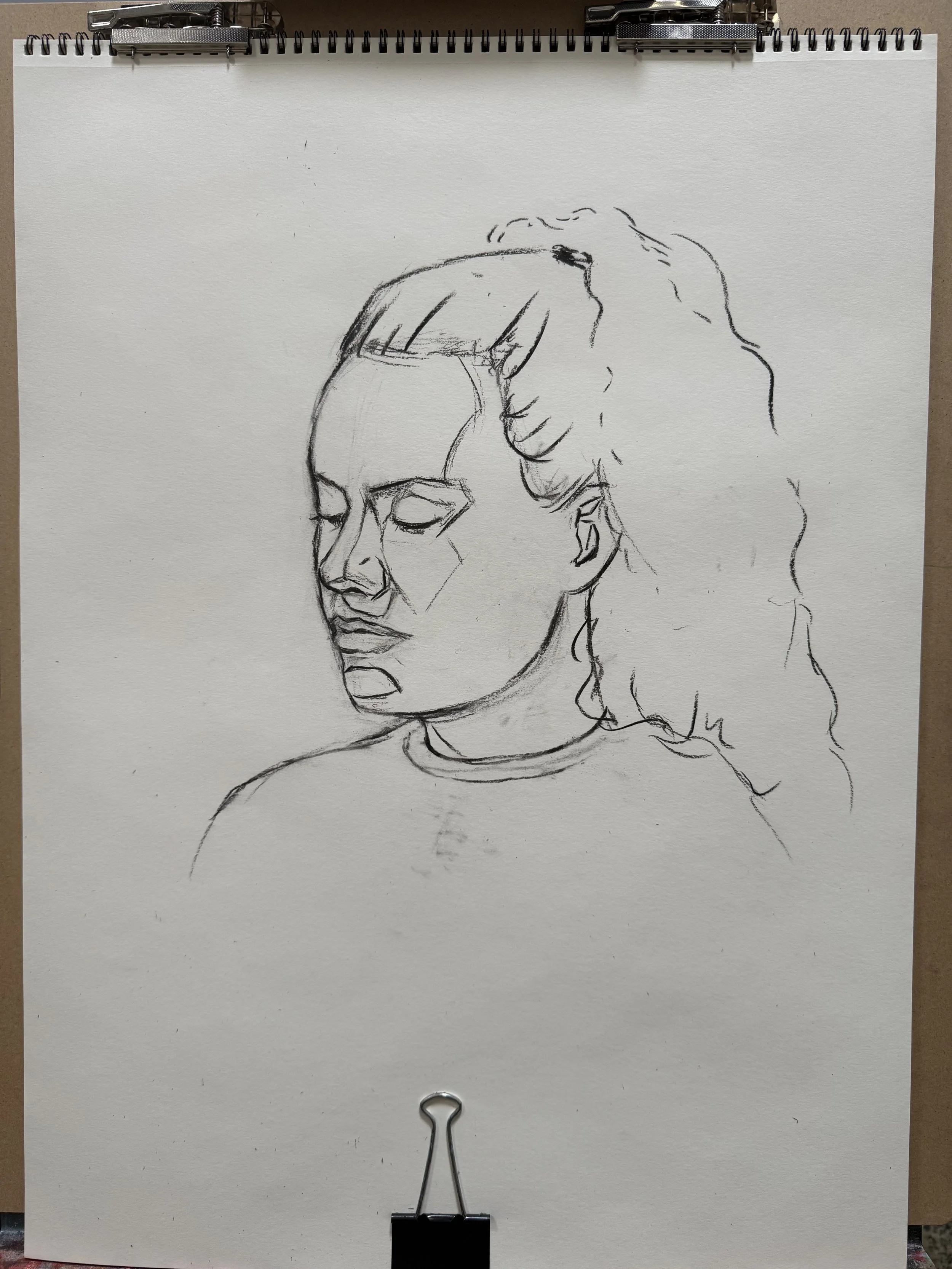
Initial Block-In with Vine Charcoal.
Once I had completed a large portion of the rendering, I reached a stage where her hair was blocked in. She had quite curly hair, but it was very soft and not super defined. It was not reflecting the lighting very strongly. This is the main area in which I contemplated this question: how can I approach this differently than a camera? If I wanted to, surely, I could go in and overly define and sharpen each curl… but this would take away from the face AND take away from the soft feeling of her hair. I could try to chase every small highlight I see, but for what? Does it strengthen the overall piece? I tend not to think so.
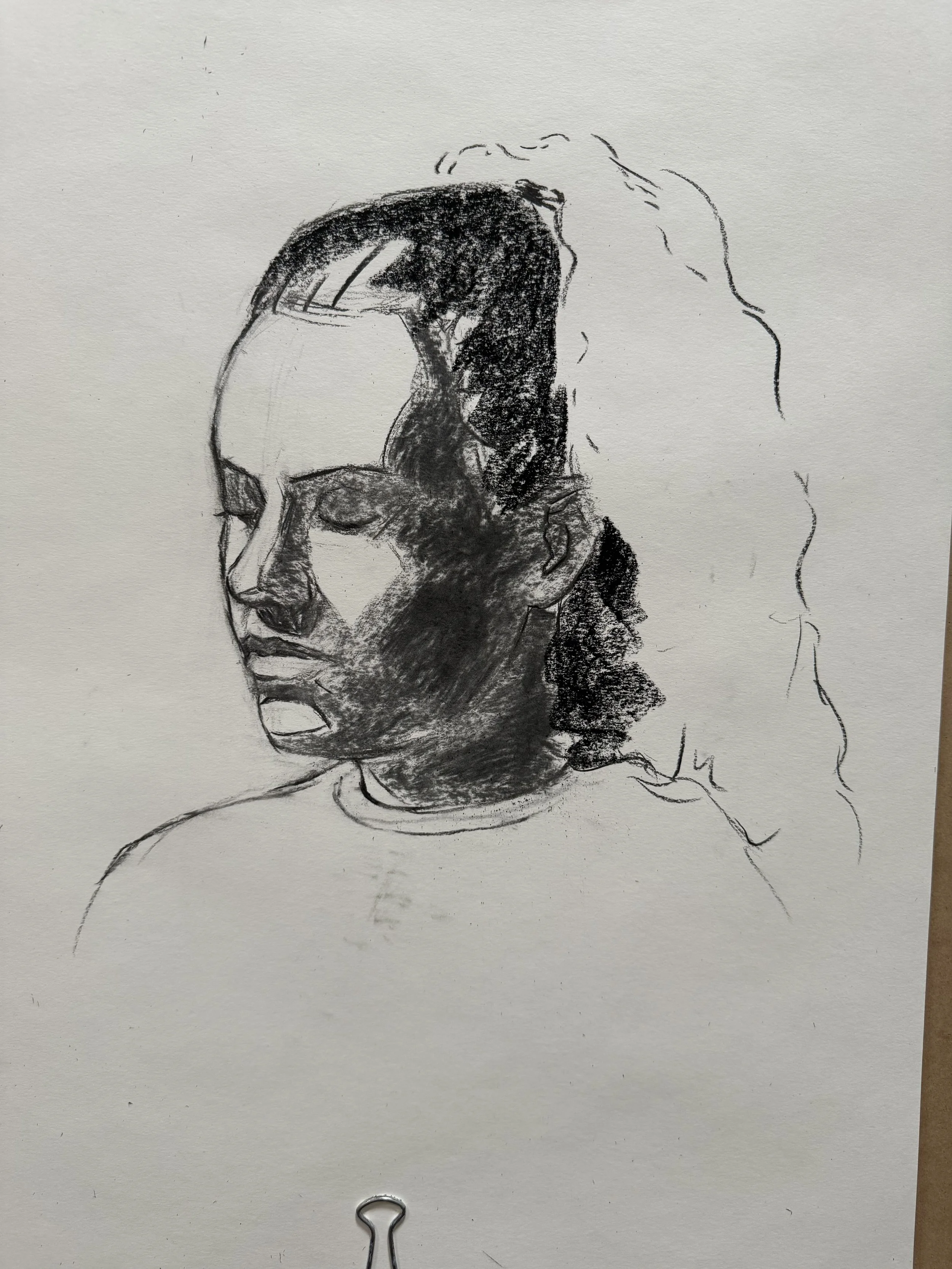
In figuring out how to approach the hair, I looked at one of my favorite artist’s drawings (Susan Lyon). While this isn’t the exact same curl pattern as my subject, it taught me so much about how to leave things more abstract to support the focal point and give the feeling of the hair.
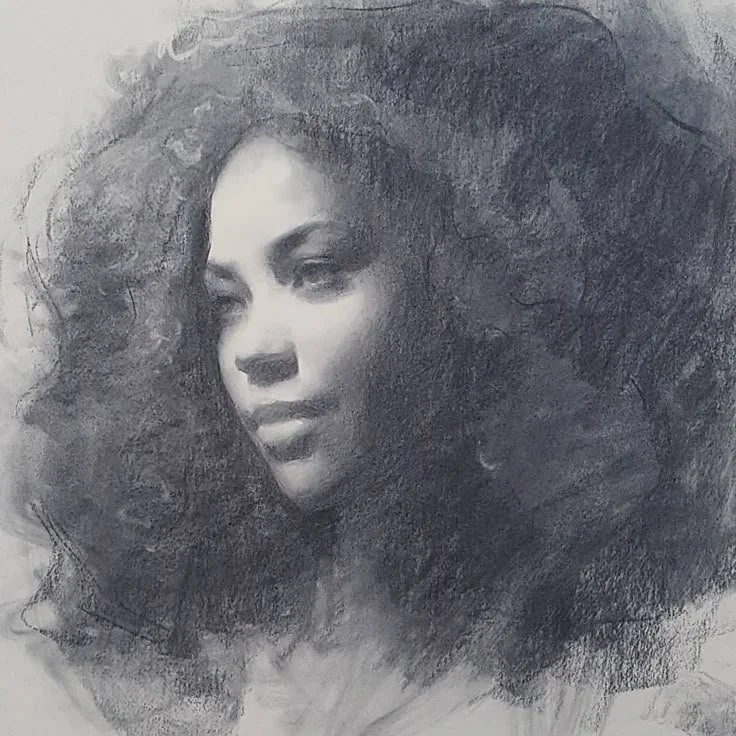
Charcoal Drawing by Susan Lyon
After studying this, I went back to my drawing and left the edges of her hair more unfinished and soft. I let the natural texture of the charcoal and paper show through. I gave the curls closest to her face some very soft definition, but still kept things loose and implied. I didn’t capture every curl, but my drawing is stronger for it.
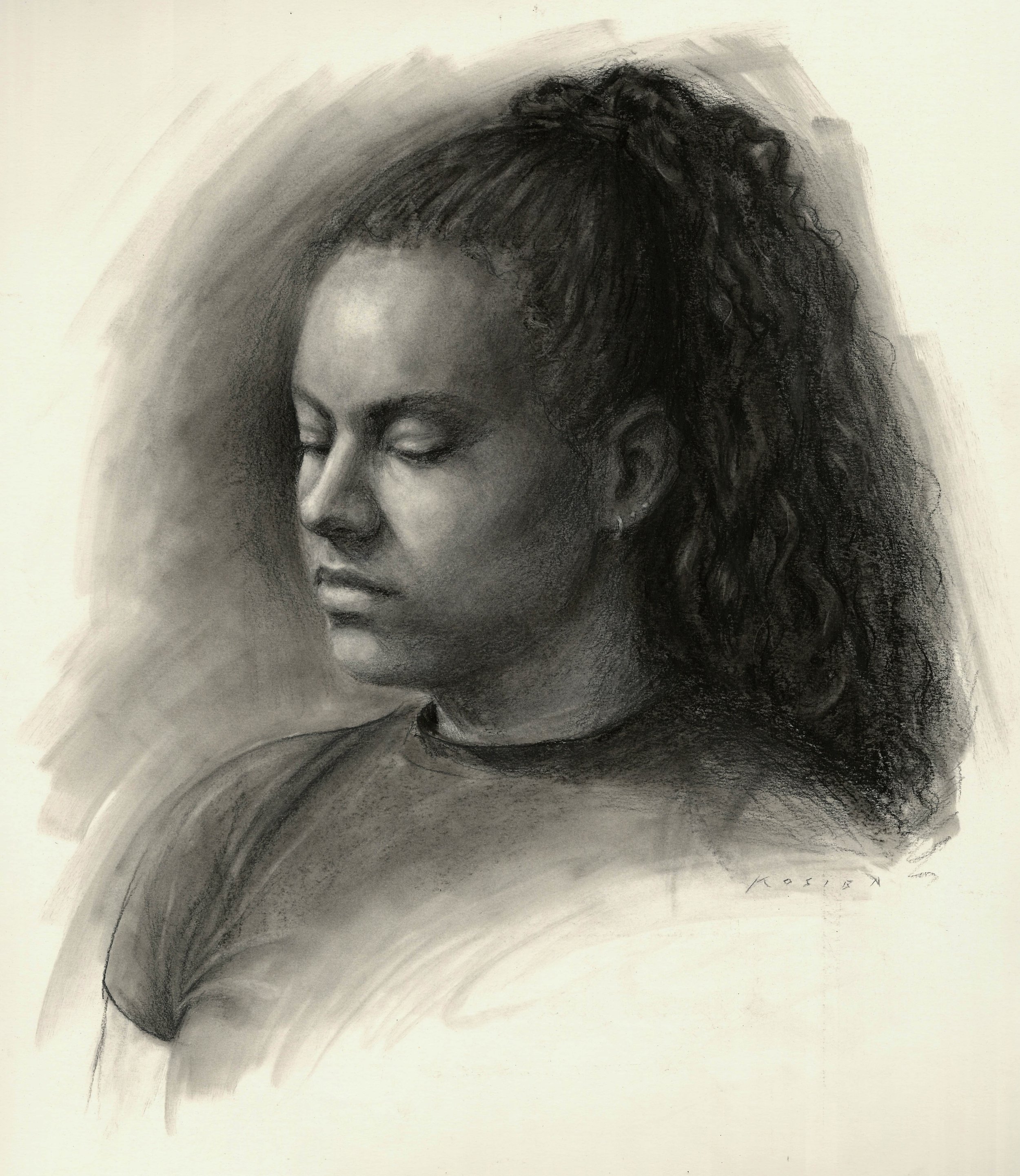
Final Drawing - 4 hours total
This more dramatic lighting with the softer diffusion of light in the hair is what makes the contrast of this drawing so satisfying! The hardest edges and strongest value contrast are in the face, where I want the attention to be. If the lighting on the face was soft, nothing about this drawing would stand out.
This is the kind of artistic interpretation my brain wasn’t capable of a few years ago. But THIS kind of analysis is exactly what makes us artists so much better than a camera (and AI, but that’s a conversation for a different day). This is what makes each drawing a unique and joyous challenge!